Cocoa Beans Flood Ivory Coast Ports as Exporters Face Liquidity Problems

According to recent reporting by Bloomberg, Ivory Coast’s ports are experiencing an unusual build up of cocoa beans as the 2025/26 season gets underway, driven by a combination of weaker global prices, cash-flow pressure on exporters, and growing anxiety among farmers about future income.
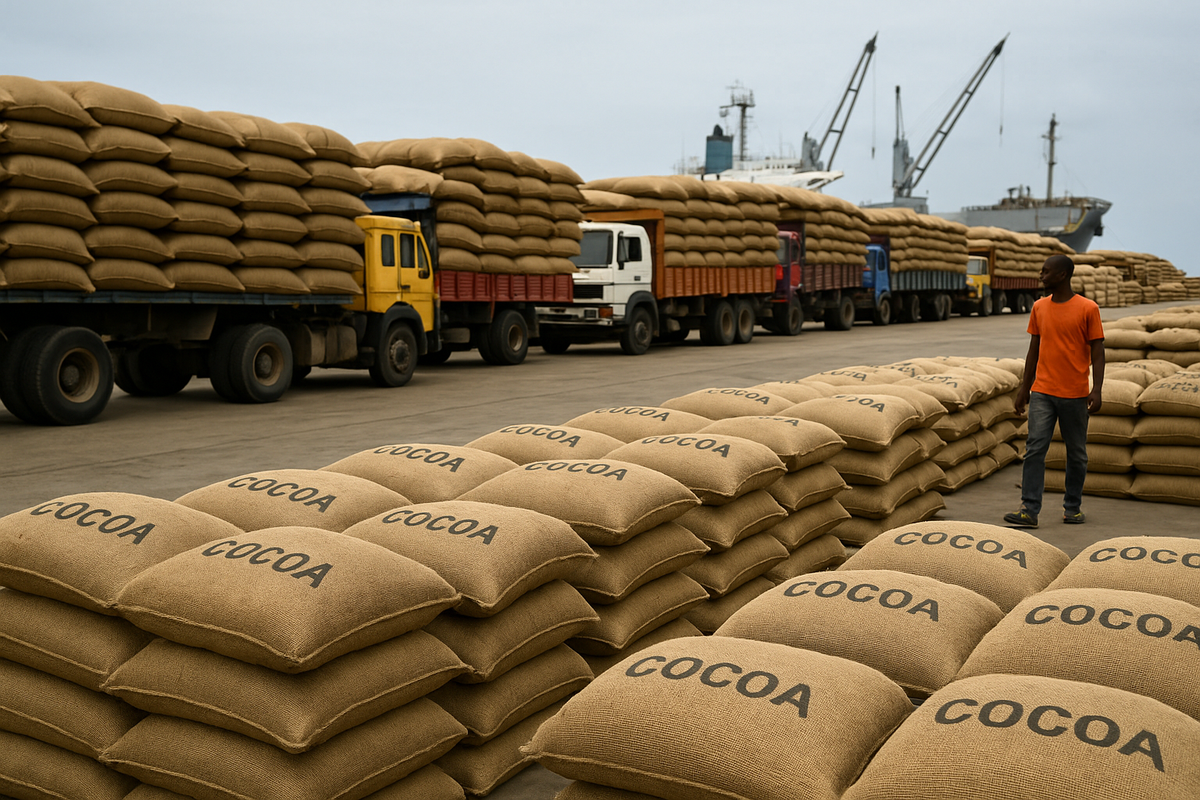
For nearly a month, long lines of trucks have stretched outside the ports of Abidjan and San Pedro. Middlemen, cooperatives, and small traders have been delivering far more cocoa than the system is typically equipped to handle at this time of year. Recent weekly arrivals surpassed 100,000 tons, a level normally associated with the peak harvest, not the early season.
The core issue is a liquidity squeeze among licensed exporters. Global cocoa prices have fallen sharply from last year’s highs, cutting into the revenues exporters expected when they committed to earlier forward contracts. With profit margins eroding, credit from local banks has tightened as well, leaving exporters short of the cash needed to buy beans at the state-mandated minimum price.
With fewer buyers available up-country, cooperatives and middlemen have redirected their deliveries to the ports themselves in hopes of finding someone willing to purchase. In some cases, the state’s trading arm, Transcao Côte d’Ivoire, has had to intervene and absorb part of the volumes to prevent the market from stalling completely.
Farmers, meanwhile, fear the government could eventually adjust the farm-gate price downward if global prices remain depressed. That concern has prompted some growers to harvest aggressively and sell whatever beans they can while the current price remains in place. This behavior has contributed to inflated arrival figures that may not reflect the underlying size or health of the crop.
The sudden surge in arrivals risks distorting analysts’ assumptions about the season’s total output. Strong early delivery numbers can create the impression of a larger crop than actually exists, a dynamic that has already added downward pressure to international prices.
Cocoa futures have fallen more than 50% from the highs seen last December, as traders anticipate a return to surplus this season. The robust arrival figures coming out of Ivory Coast have reinforced this bearish narrative.
The sector regulator, Le Conseil Café-Cacao (CCC), has responded to the growing congestion by intermittently blocking new truck arrivals through pauses in its registration system, increasing oversight of buyers following reports of under payment and weight manipulation, which has already led to several arrests and slowing the issuance of delivery notes, the documents needed to move cocoa from producing regions to export hubs. The delayed paperwork has left an estimated 120,000 tons of beans stalled in warehouses awaiting authorization. Although the CCC has not released a formal explanation for the administrative slowdown, farmer groups say the backlog is intensifying anxiety among growers who are already uneasy about the direction of prices.
The situation illustrates how vulnerable the Ivorian supply chain is when global price conditions shift abruptly. Until exporters regain financial breathing room either through price recovery or improved access to credit, port congestion is likely to remain a feature of the early season.
Analysts warn that inflated arrival numbers could continue to mislead the market, keeping prices under pressure even if the real crop turns out to be smaller than the headline figures suggest.