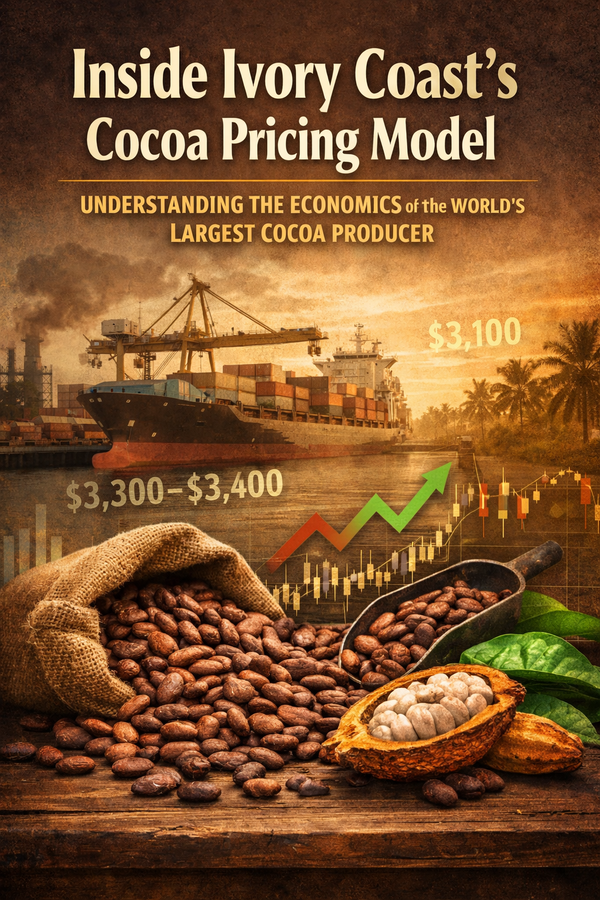
THE COCOA RECKONING: WEST AFRICA’S TREE-STOCK COLLAPSE AND THE SYSTEM THAT CAN NO LONGER HIDE IT

For two decades the cocoa industry has lived on a comforting illusion: that West Africa — with its deep forests, vast smallholder networks, and political incentives to preserve high-volume exports — would continue supplying the world regardless of shocks, crises, weather, or structural decay. That illusion is now dissolving. Behind the headlines about El Niño, volatile futures prices, fertilizer shortages, smuggling, and political unrest lies the deeper truth that governments, buyers, and donors have avoided because of its consequences. West Africa’s cocoa system is collapsing at its biological core. The tree stock — the living engine of global chocolate supply — is dying, aging, diseased, overstressed, under-renewed, and incapable of sustaining the production volumes that global markets still naïvely assume are attainable.
This is not speculation. It is not a cyclical downturn. It is not a temporary shock. It is a structural unravelling on a continental scale.
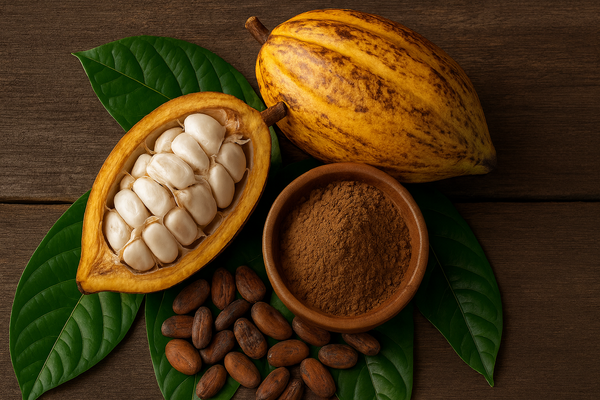
Cocoa trees are not eternal. Their economically productive lifespan is about 15 to 25 years in West African conditions. After that, the biological decline becomes irreversible: yields fall, disease spreads, nutrient demands rise unsustainably, and economic viability drops below zero unless farmers engage in heavy, expensive maintenance that few can afford. A sustainable origin requires a constant inflow of young trees and a disciplined outflow of old ones. The ecological logic is simple. West Africa’s political economy has violated it for decades.
In Côte d’Ivoire, the warning signs were visible years ago. By 2019, agronomic surveys showed that roughly 20 percent of plantations were already older than 30 years, most were older than 20, and yields were languishing at 350–650 kilograms per hectare — far below what modern hybrids can achieve under proper management. The U.S. agricultural service later quantified the ageing explicitly: about a quarter of Ivorian cocoa trees have surpassed their commercially productive years. These are not isolated pockets of decline. They are the structural foundation of the world’s largest cocoa origin.
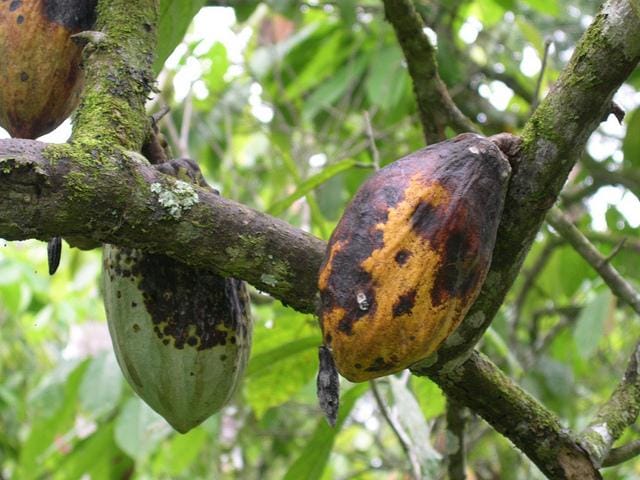
Disease has exploited this vulnerability. Swollen shoot virus — the most destructive pathogen in the cocoa world — now infects eleven of the country’s thirteen cocoa-producing regions. More than 100,000 hectares have already been uprooted in attempts to contain it, but Reuters reporting reveals a far more alarming truth: swollen shoot is affecting approximately half of all Ivorian cocoa fields. Once infected, the trees must be destroyed. There is no cure. The country faces a disease front far larger than the political messaging admits.
Then came the decision that accelerated the collapse: in 2020, Ivory Coast stopped distributing improved seedlings and paused the renewal of plantations to prevent output from exceeding two million tonnes. It was an attempt to engineer supply control without understanding that cocoa is not a tap you can close and reopen at will. Four lost years in perennial agriculture is not a policy hiccup; it is an irreversible decay cycle. Trees that should have been replaced from 2020 to 2024 now stand older, sicker, less resilient, and more exposed to climate shocks. The regulator has since reversed course, restarting seedling distribution in 2024/25, but the damage inflicted during those lost years will echo through the next decade.
Yet Ivory Coast’s structural problem goes deeper. For decades, the country masked the ageing crisis by pushing cocoa into forested land. A 2019 study documented the scale: sixty percent forest loss from 1990 to 2015, roughly 200,000 hectares of forest cleared each year, and up to forty percent of Ivorian cocoa coming from protected forests. This was the hidden engine of Côte d’Ivoire’s rise to over two million tonnes. But the frontier is gone. Satellite policing, international pressure, and the EU deforestation regulation have ended the era of expansion. Côte d’Ivoire, for the first time in its modern cocoa history, must rely on existing land rather than new forest. And existing land is old, diseased, and structurally exhausted.
Ghana’s situation is even more severe. In 2020/21, Ghana produced approximately 1.045 million tonnes. Three seasons later, the country struggles to hold production above 500,000 tonnes — the lowest in fifteen years. Independent pod counters, who care nothing for official optimism, are openly skeptical that Ghana can sustainably return above this level any time soon. The reasons are written in the land.
A national survey in 2017 found that 17 percent of all Ghanaian cocoa trees were infected with swollen shoot virus. In Western North — the region that once delivered nearly a third of national output — 67 percent of cocoa farms were infected, representing more than 200,000 hectares of compromised land. Another 23 percent of Ghana’s cocoa area was classified as over-aged or moribund, meaning the trees yielded so poorly they were barely worth harvesting. These were data from seven years ago. The crisis has not stood still.
Ghana launched a rehabilitation programme supported by a $290 million African Development Bank facility. But despite the scale of the funding and the political emphasis, only about 67,385 hectares have been rehabilitated and about 40,150 hectares have returned to productive phase. Meanwhile, earlier surveys estimated that swollen shoot alone affects more than 300,000 hectares across the country. COCOBOD’s most recent planning documents still list more than 90,000 hectares as actively infected. The gap between the problem and the response remains enormous. The virus continues to spread faster than the state can uproot and renew.
Even in non-infected zones, Ghana’s orchards are deteriorating. Fertilizer subsidies have been curtailed under budget pressure. Input distribution has weakened. Labour costs have risen. Pruning is inconsistent. Fungicide coverage is inadequate. The result is a vast landscape of mid-aged and old trees whose yields decline year after year. And over this weakened system, the shock of illegal gold mining falls like a hammer. Galamsey destroys soil, poisons rivers, attracts labour away from agriculture, and permanently removes land from the cocoa map. A cocoa tree can be replanted; a mercury-polluted pit cannot. Ghana is losing not just yield but land itself.
Replanting is the logical solution — but not the economic one for most farmers. Cocoa trees take years to generate meaningful income. Ghana’s stipend of GHS 1,000 per hectare is not enough to compensate for the loss of three to five seasons of cash flow, especially for older farmers who cannot afford to wait for maturity. Land tenure complications add another layer of hesitation. Many caretakers, sharecroppers, and landowners fear that entering the official rehabilitation programme could weaken their land rights or change farm control. Faced with uncertainty and short-term survival pressures, farmers do what is rational for them but catastrophic for the system: they cling to old trees instead of cutting them, hoping for a good season or a temporary price spike rather than resetting the orchard cycle.
This brings both countries to the same structural dead end. Ivory Coast can no longer expand into forest; Ghana can no longer hide the disease burden. The age profile and health of the tree stock in both countries are failing simultaneously. West Africa’s combined output — which once approached 3.4 million tonnes — is now structurally constrained by biological decay rather than market cycles.
This is the point the market refuses to internalize. Analysts cling to the old commodity playbook: high prices stimulate supply, and the next season brings a rebound. That logic only works when the underlying asset — the trees — is capable of responding. A geriatric, virus-infected tree cannot respond to price. A dead tree cannot increase output. A farm lost to illegal mining does not return. And a farmer in his sixties, with children unwilling to enter cocoa, cannot deliver a replanting surge even if offered better prices.
The demographic crisis amplifies this decline. The average cocoa farmer in Ghana or Côte d’Ivoire is approaching 50 to 60 years old. Young people overwhelmingly reject cocoa because it offers low returns, high risk, and a slow payout compared to mining, transport, rubber tapping, or urban work. When the farmer population ages out, the replanting cycle collapses with it. A tree-stock collapse is survivable if paired with a young, motivated, supported farming population. West Africa does not have that. It has the opposite: old trees and old farmers, both nearing the end of their productive lives.
Climate volatility deepens the damage. Droughts and heat waves accelerate the death of stressed trees. Heavy rains amplify fungal outbreaks. The Harmattan shreds flower sets and pod development on weakened orchards. Climate stress does not create the cocoa crisis — it exploits the biological weakness that the ageing tree stock has already created.
And now the system faces an external shock it cannot afford: the EU deforestation regulation (EUDR). Europe purchases more than half of Côte d’Ivoire’s cocoa and a large share of Ghana’s. The regulation requires precise farm-level mapping and proof that cocoa is not grown on recently deforested land. Both countries are catastrophically behind on mapping. Thousands of smallholders will not be compliant in time. Millions of kilos of cocoa could become legally unsellable in Europe. And because Côte d’Ivoire relied so heavily on forest encroachment in the past, its vulnerability to EUDR is profound. EUDR is not just an export issue — it is a strategic threat to the entire economic architecture of the Ivorian cocoa system.
This brings us to the second half of the truth — the part that is almost never discussed openly because of its market implications. The ageing tree-stock crisis is not just biological or agronomic; it is now triggering a financial, political, and structural unravelling of the entire West African cocoa economy. Markets have not priced this in. Governments have not admitted it. But the data and the ground realities no longer allow denial.
PART TWO: THE FINANCIAL, GEOPOLITICAL, AND MARKET CONSEQUENCES OF A DYING TREE STOCK
The first consequence is credit deterioration across the supply chain. CCC in Côte d’Ivoire and COCOBOD in Ghana rely heavily on syndicated loans collateralized by forward sales. These facilities function only when the regulator can credibly guarantee future output. But with tree-stock decline accelerating, swollen shoot spreading, and orchard renewal far below the required pace, the collateral basis of these loans is weakening. Banks see rising delivery risk. They reduce pre-financing. Payment delays cascade. Exporters limit purchases. Small buyer networks seize up. Liquidity shrinks and rural financial stress deepens. A tree-stock crisis thus becomes a credit crisis.
Second, negative differentials on West African cocoa deepen as quality falls. Old trees and stressed farms produce smaller beans with lower fat content. Farmers facing financial pressure shorten fermentation or dry beans too quickly. Smoke taint, mold, and acidity issues increase. Processors impose heavier penalties. West Africa’s cocoa begins trading at steeper discounts to Latin American origins. The price signal that should drive replanting instead punishes the region, creating a vicious cycle.
Third, the global procurement landscape is shifting. Ecuador — with higher-yielding clones, disease-resistant varieties, and efficient supply chains — is emerging as the structural winner. Brazil is expanding. Dominican Republic is gaining premium market share. As West Africa declines, buyers diversify. The era of unquestioned West African dominance is ending not because others overtook it, but because West Africa failed to renew itself.
 Cocoa Intel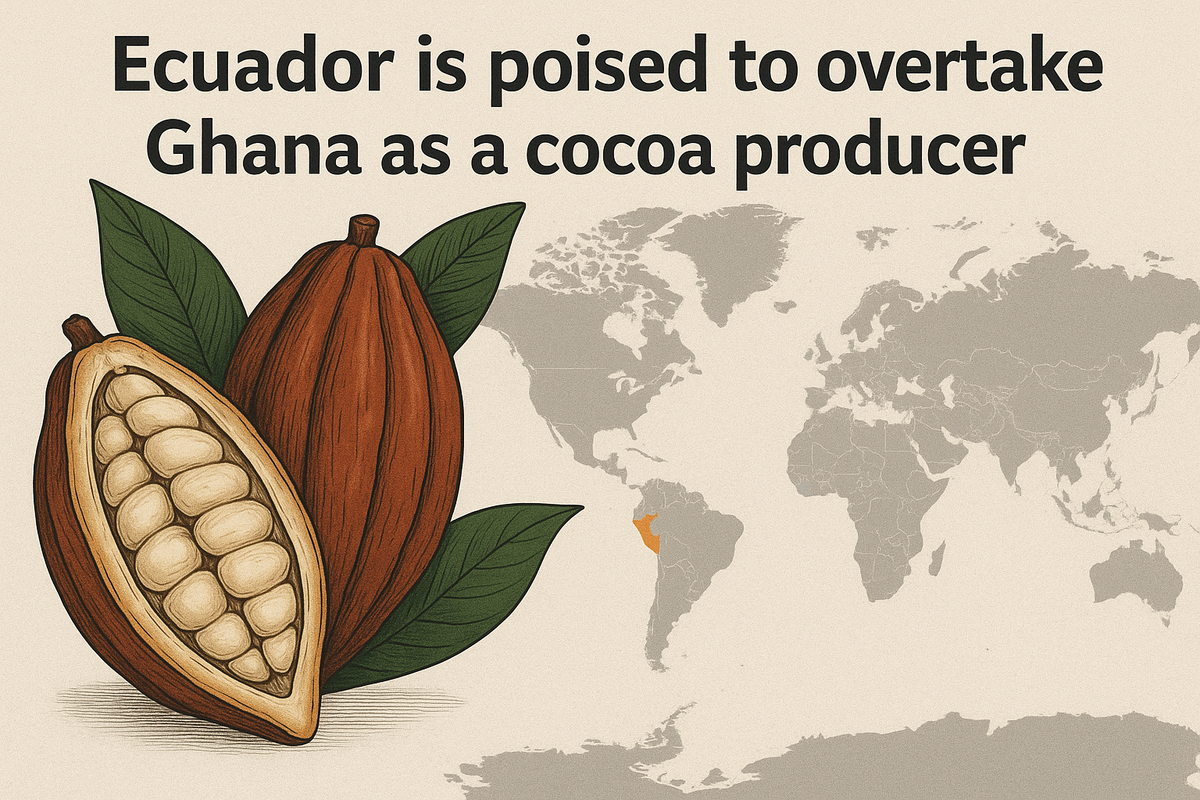
Fourth, smuggling distorts the entire regional picture. Ghana’s production statistics are artificially depressed by illegal cross-border flows. Côte d’Ivoire’s statistics are artificially inflated by the same flows. Forward-sales planning, tax revenue collection, and official export numbers are misaligned with reality. The illusion of “stability” in Ivorian output partially rests on smuggled Ghanaian beans. Remove smuggling from the equation and the collapse in Ghana looks even more severe — and the apparent resilience of Côte d’Ivoire appears weaker.
Fifth, political consequences are building. In both countries, farmers feel betrayed. They see rising world prices and collapsing domestic volumes. They distrust regulators, question farmgate formulas, and in Ghana’s case have openly threatened resistance against COCOBOD and border controls. Governments lack the fiscal space to buy social peace. IMF conditionality limits Ghana’s choices; the CFA peg limits Côte d’Ivoire’s.
Sixth, the global cocoa market is mispricing the structural decline because it still treats West Africa as fundamentally elastic. It expects supply to recover after shocks. But this time, the orchard base is too degraded. The bounce-back the market assumes simply does not exist. Futures markets are still reacting to weather patterns, not biological reality. When the truth becomes impossible to hide — when EUDR exclusions hit, when delivery failures mount, when quality collapses further, when credit tightens, when Ecuador’s share rises — the market will undergo a violent repricing. Not a spike. A structural revaluation of the entire cocoa supply system.
The final consequence is the one nobody in Abidjan, Accra, London, or Zurich wants to face: the possibility that West Africa’s cocoa dominance does not undergo a cyclical recovery but a long-term, irreversible contraction. Cocoa production in Ghana and Côte d’Ivoire may already have passed its structural peak. Without radical intervention — tens of billions of dollars in replanting, aggressive disease eradication, strict anti-mining enforcement, a complete overhaul of extension services, and a total redesign of land tenure incentives — the next ten years will not be a recovery phase but a controlled decline.
The brutal truth is that cocoa’s crisis did not begin with El Niño, or with the price spike, or with fertilizer shortages, or with the recent crash. It began with decades of quiet biological neglect. The trees are old. The diseases are entrenched. The forests are gone. The farmers are aging. The youth have left. The regulators are financially stretched. The banks are nervous. The buyers are diversifying. And the climate is accelerating the decline.
This is the reckoning the industry has avoided. You can restructure debt, adjust farmgate prices, renegotiate premiums, deploy sustainability labels, or run new training programmes — but none of that resurrects an exhausted orchard. None of it reverses decades of under-replanting. None of it makes a 35-year-old tree young again. None of it gives a 60-year-old farmer the time or capital to rebuild his farm from scratch.
Cocoa is a biological system, and biology does not care about political messaging, economic forecasts, or market narratives. West Africa ignored that truth for too long. Now the system is calling in the debt.
Unless the region replaces its dead and dying trees at continental scale — hundreds of thousands of hectares, not tens of thousands — it will not merely suffer lower production. It will lose its place at the center of the global chocolate economy. And when that happens, the loss will not be reversible. Because once enough trees are gone, enough farms are abandoned, enough youth have left, and enough land is destroyed or non-compliant, you do not just lose supply. You lose the future.
You can negotiate with traders.
You can negotiate with lenders.
You can negotiate with donors.
But you cannot negotiate with a dead tree.
And West Africa has millions of them.