Weather Analysis Week 51 and 52

Past Week 51 Weather (December 15-21, 2025)
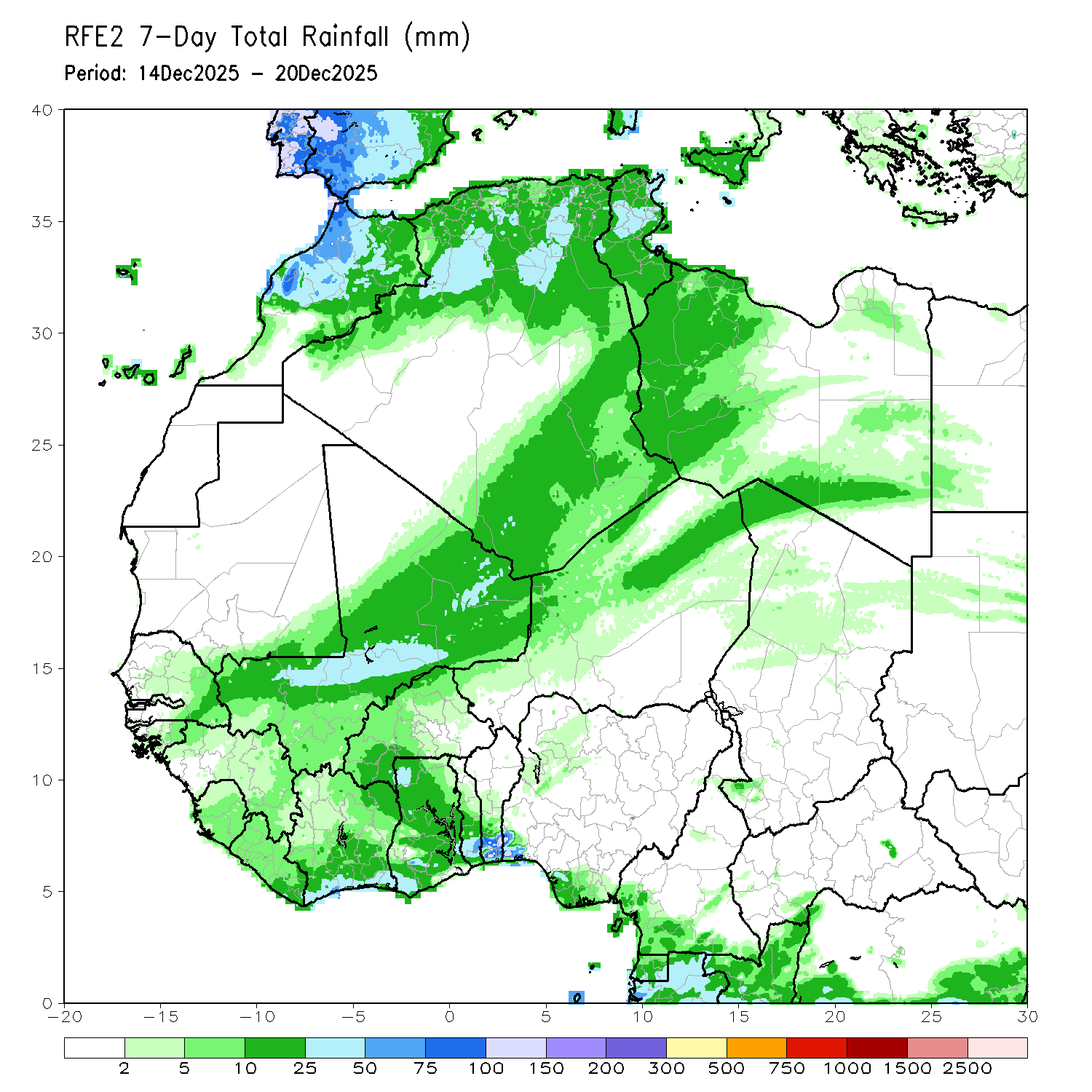
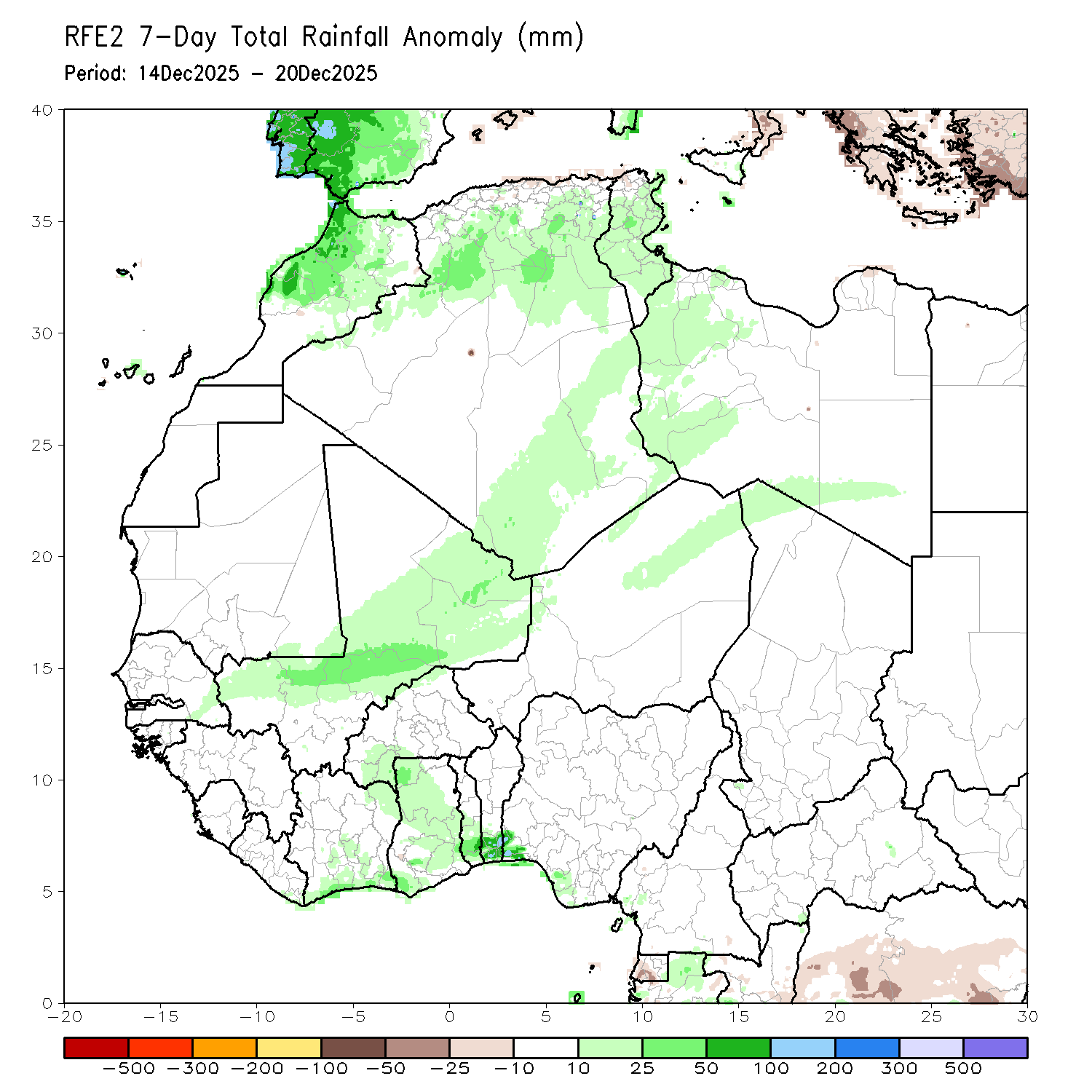
Over the past week, rainfall across the core cocoa-growing regions of Côte d’Ivoire and Ghana was broadly near-normal to slightly above normal, according to the RFE2 anomaly data. Positive anomalies were generally modest, concentrated in the +10 to +50 mm range, and importantly there were no widespread dry anomalies across the southern forest belt. This confirms that cocoa areas were not exposed to moisture stress during the period.
Actual rainfall totals show that most producing regions in southern and central Côte d’Ivoire received between 10 and 50 mm, with locally higher amounts in the west. Ghana’s main cocoa belt experienced similar totals, slightly lighter in the east but still sufficient to maintain soil moisture. From an agronomic standpoint, this pattern is constructive: it supports ongoing pod filling, stabilizes tree water balance, and helps sustain physiological activity without triggering excessive disease pressure. Rainfall was frequent enough to replenish moisture but not persistent or intense enough to significantly increase black pod risk or cause harvest disruptions.
Current Week 52 Forecast (December 22-28, 2025)
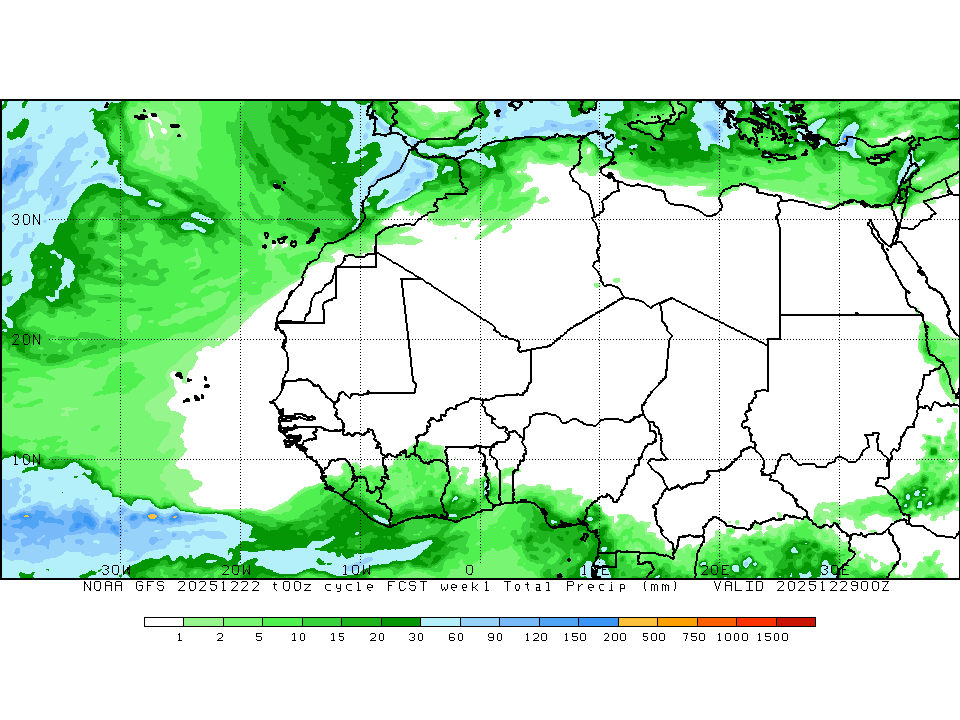
For the coming week, forecast guidance indicates a generally stable and supportive rainfall pattern across the core cocoa zones of Côte d’Ivoire and Ghana, with no signs of disruptive weather developing. Rainfall is expected to be light to moderate, broadly in the 10 to 30 mm range, with localized pockets, particularly in western and southern Côte d’Ivoire, reaching closer to 30 to 50 mm. Ghana’s main forest belt is likely to receive slightly lighter but still adequate accumulations, especially across Ashanti, Western North, and parts of the Eastern Region.
The spatial distribution of rainfall is important. Precipitation is forecast to be intermittent rather than continuous, which limits disease pressure while still maintaining soil moisture. This balance is favorable for cocoa trees moving through the late minor crop phase and preparing for the next flowering cycle. There is no indication of prolonged dry spells and no signal of excessive multi day rainfall that would elevate black pod risk or significantly disrupt harvesting and drying activities.
Atmospheric conditions suggest no meaningful Harmattan intrusion into southern Côte d’Ivoire or Ghana during the period. Dry continental air remains confined further north, meaning humidity levels in the cocoa belt should stay sufficient to prevent moisture stress. As a result, evapotranspiration demand is expected to remain moderate and trees should maintain stable physiological conditions.
From an agronomic perspective, the outlook supports continued pod development and flower survival without introducing new weather related risks. From a market standpoint, the coming week’s weather in Côte d’Ivoire and Ghana remains neutral for prices. It neither threatens supply nor introduces upside weather risk. Any market movement is therefore likely to remain driven by structural supply issues, certified stock levels, and speculative positioning rather than near term meteorological factors.