Week 47/48 Cocoa Weather Report – West Africa


Past Week 47 Weather Review
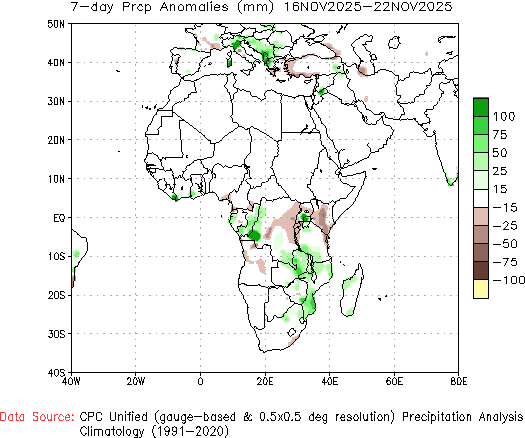
Rainfall Performance (Past 7 Days)
Côte d’Ivoire:
- Central and western cocoa belt extremely dry — 10–25% of normal rainfall.
- Southeastern belt also below normal (25–50%).
- Very limited pockets of normal rainfall.
➡️ Soil moisture stress is increasing quickly across core producing regions.
Ghana:
- Western Region: Near-normal to slightly above normal rainfall.
- Ashanti, Ahafo, Brong Ahafo: Below-normal rainfall.
- Eastern & Volta: Dry.
➡️ Patchy moisture: some improvement west, but dryness dominates inland cocoa zones.
Nigeria:
- Mostly below-normal rainfall across southern states.
- Early moisture stress emerging.
Cameroon:
- Centre/SW: near-normal
- East: above-normal rainfall
➡️ Cameroon remains in the best moisture condition in West Africa.
Temperature Conditions (Past Week 47)
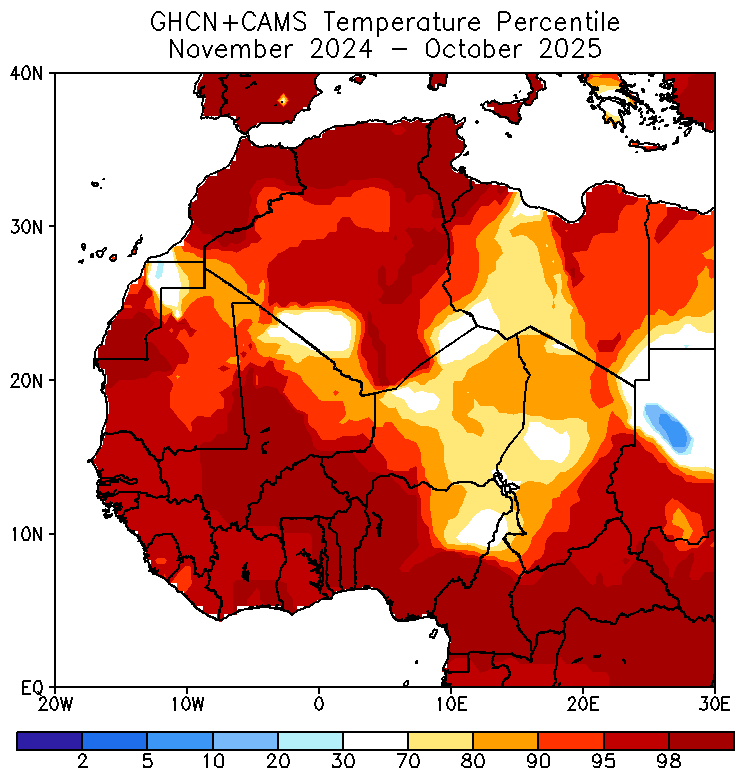
- Temperatures were warmer than normal across Côte d’Ivoire and Ghana.
- Elevated evapotranspiration accelerated soil moisture loss.
- Heat stress amplified the effect of low rainfall.
➡️ Combination of heat + dryness is directly harmful to flowering and early pod development.
Coming Week 48 Weather Outlook
Côte d’Ivoire:
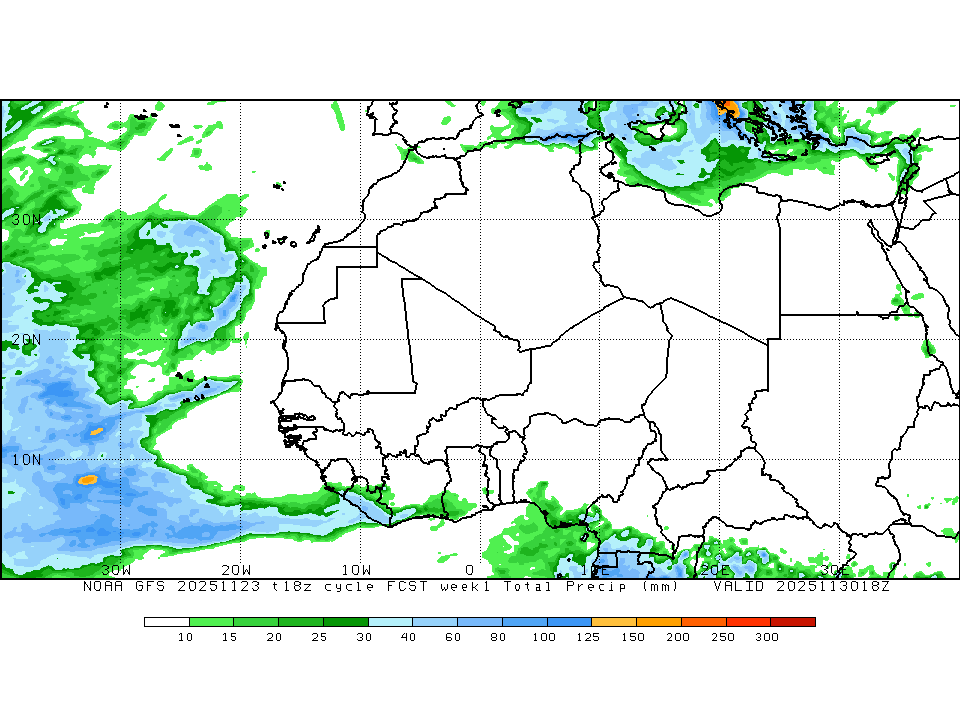
- Very weak rainfall (10–20 mm total).
- Insufficient to stabilize moisture.
- Inland cocoa belt remains dry.
➡️ Moisture stress will intensify. Harmattan risk increasing.
Ghana:
- Most cocoa regions only receive 10–20 mm.
- Southern coast slightly better (20–30 mm).
- Still significantly below seasonal norms.
➡️ Soil moisture deficits continue.
Nigeria:
- South receives 20–40 mm, better than CI/Ghana.
- Moisture support acceptable but still trending dry overall.
Cameroon:
- 30–60 mm expected; remains the most stable cocoa region.
Soil Moisture & Agronomic Impact Assessment
Soil Moisture Trend:
🔻 Declining rapidly in Côte d’Ivoire & Ghana
⚠ Poor rainfall + high temperatures = accelerated drying
⚠ Early Harmattan patterns visible north of cocoa zones
Agronomic Impacts:
- Flowering: High drop rates expected
- Cherelle (small pod) survival: Increased abortion likelihood
- Pod filling: Size/bean count likely suppressed
- Diseases: Low black pod risk due to dryness
- Harmattan: Early onset signs → major risk for December
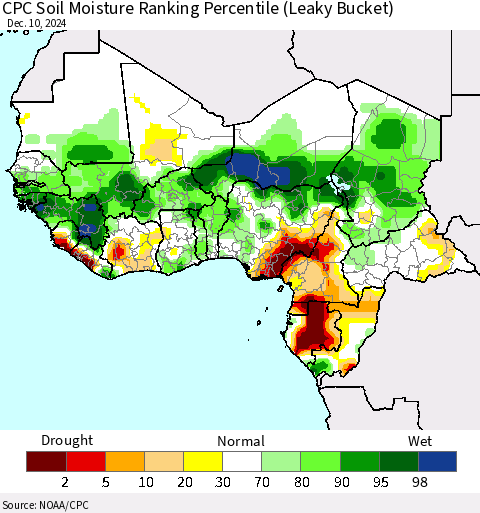
Harmattan Risk Outlook
Early-season indicators show:
- Strong dryness over Mali/Burkina → air parcel pathways drying
- Dust intrusions may start increasing over northern Ghana & northern Côte d’Ivoire
- Expected intensification into early December
Potential impacts:
- Rapid moisture loss
- Flower abortion
- Sunscald damage
- Bean size reduction
- Increased pod shrinkage
➡️ Harmattan is the major threat to watch for the next 3–6 weeks.
Regional Weather Risk Summary
| Region | Current Risk Level | Key Drivers |
|---|---|---|
| Côte d’Ivoire | 🔴 Very High | Weak rainfall, high heat, early Harmattan signs |
| Ghana | 🟠 High | Patchy rainfall, rising deficits |
| Nigeria | 🟡 Medium | Some rainfall support but still below normal |
| Cameroon | 🟢 Low | Stable moisture, adequate rainfall |
If you notice any discrepancies in these figures or have extra information, please email cocoatradeblog@gmail.com or leave a comment – corrections and additional insights are always welcome.