West Africa Cocoa Belt Weather Outlook - Week 8/9

Week 9: 23.2.26 - 30.2.26
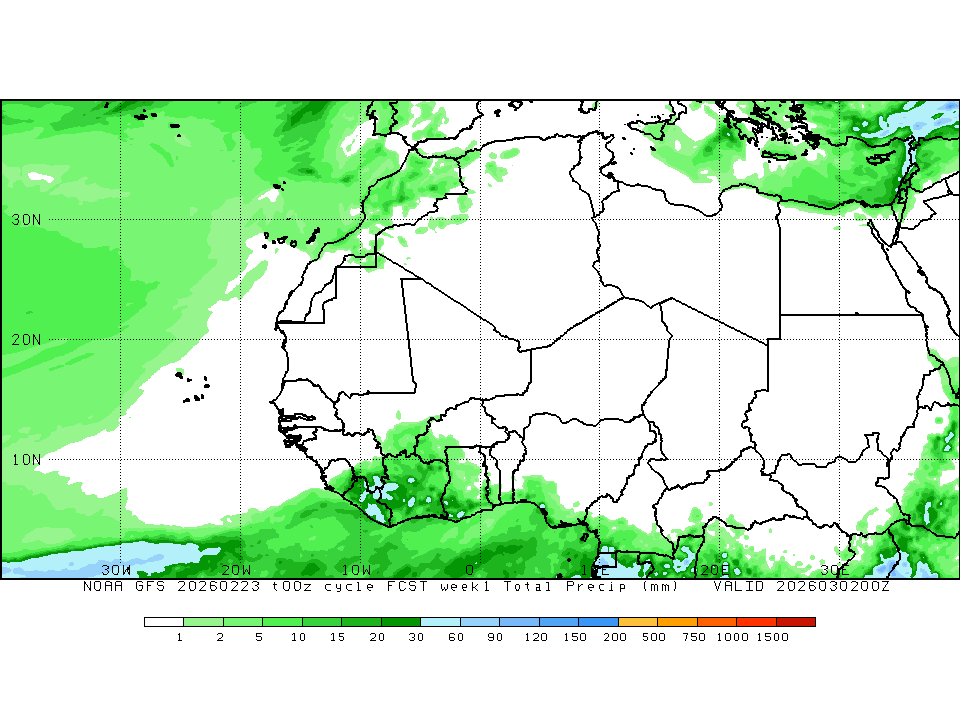
For the current week (NOAA GFS Week-1 total precipitation forecast, valid around 30 March 2026), indicates predominantly light to moderate rainfall along the Gulf of Guinea coastal belt. Most coastal areas are forecast to receive roughly 10–30 mm, with localized pockets potentially reaching 30–60 mm. Rainfall amounts taper inland north of approximately 7–8°N, generally falling into the 5–15 mm range. This level of rainfall should provide maintenance moisture and help stabilize soil conditions, but it does not represent a significant seasonal intensification or a high-impact rainfall event for the cocoa belt of southern Ghana and Côte d’Ivoire.
Week 8: 15.2.26 - 21.2.26
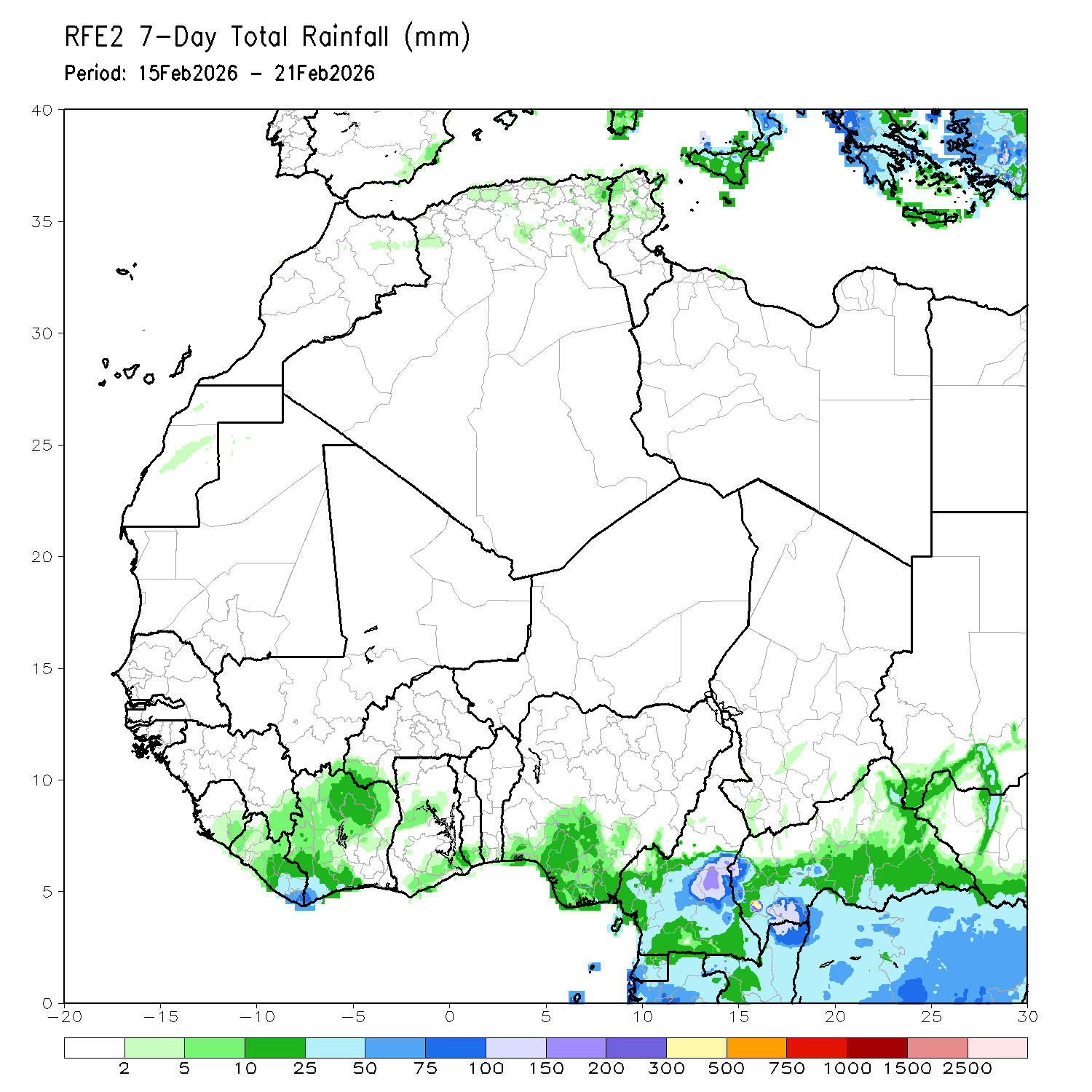
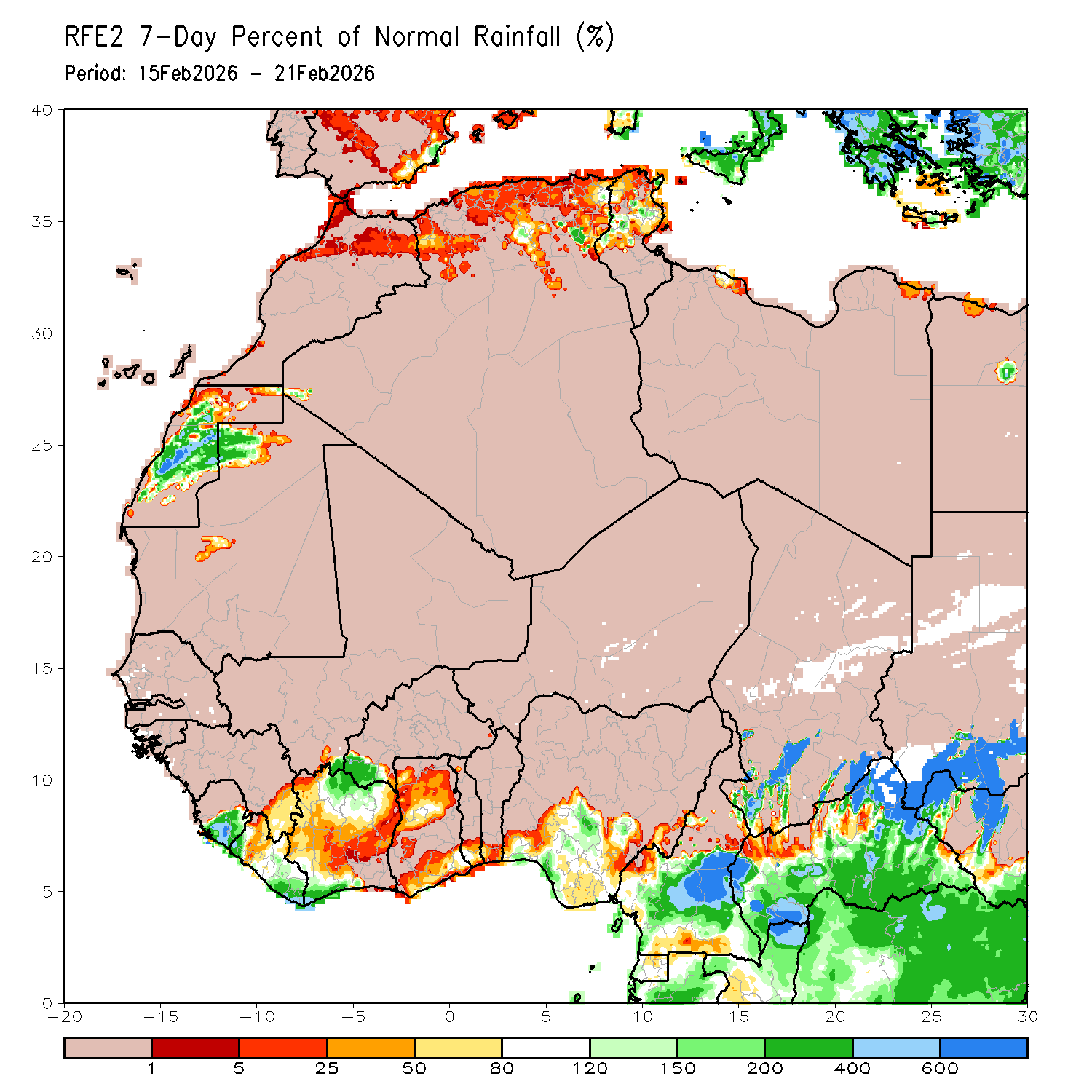
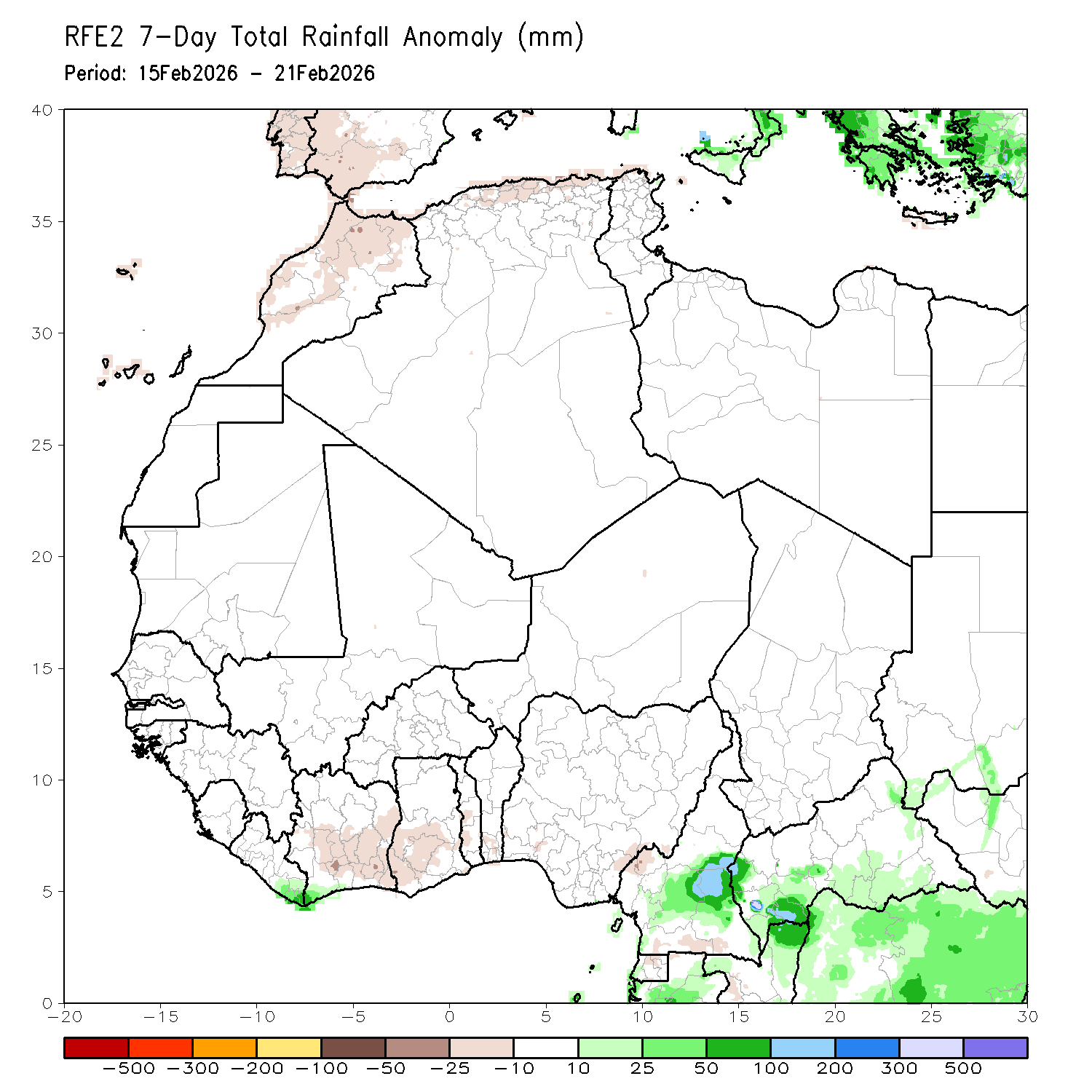
For 15–21 February 2026, the combined RFE2 datasets—total rainfall, percent of normal, and absolute anomaly—indicate that the southern Côte d’Ivoire and western Ghana coastal cocoa belt experienced modest but sub-seasonal precipitation. Weekly totals were generally in the 10–25 mm range along the immediate coastline, tapering slightly inland, with only very localized higher coastal pixels and no widespread heavy-rain cores. However, relative to climatology, most of the region registered between 25–80% of normal rainfall, with some inland pockets falling below 25%, indicating that the week underperformed typical mid-February expectations. The anomaly field corroborates this, showing broadly negative departures of roughly −10 to −50 mm across much of the belt and only isolated minor positive anomalies. Structurally, this reflects weak coastal convection rather than a monsoon surge or organized rainfall event. Agronomically, the rainfall provided short-term maintenance moisture supportive of cocoa development, but it did not fully replenish seasonal requirements, resulting in a modest net moisture deficit for the week. On its own, this does not signal drought or structural crop stress, but persistence of similar below-normal weeks into March would begin to elevate mid-crop moisture risk.
Soil Moisture - January
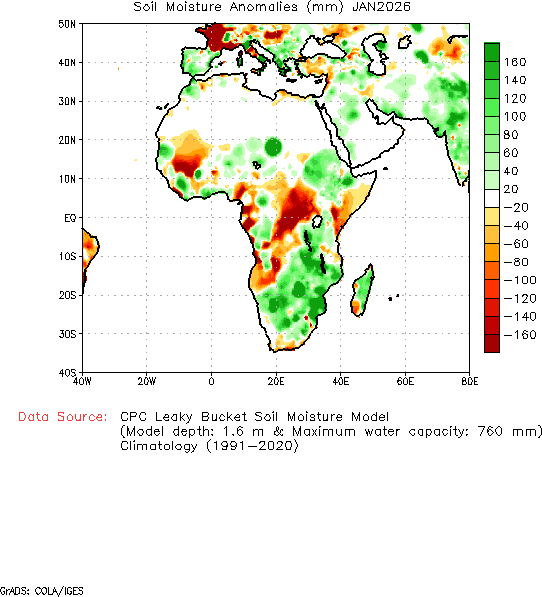
In January 2026 this zone is shown predominantly in green shading on the CPC Leaky Bucket soil-moisture anomaly map. That indicates root-zone soil moisture that is generally near-normal to above normal, with many areas plausibly in the +20 to +80 mm anomaly range (and locally higher in the greener cores), implying a net surplus of stored water relative to the 1991–2020 climatology at 1.6 m model depth. The stronger negative anomalies (orange/red) are mainly displaced away from the core coastal Ghana–Côte d’Ivoire belt—appearing more prominently farther north toward the Sahel latitudes and in parts of Central/East Africa—so the key takeaway is that southern Ghana and southern Côte d’Ivoire entered February with supportive subsoil moisture reserves, reducing immediate drought stress risk even if a given week of rainfall in February runs below normal.