West Africa Cocoa Belt Weather Outlook - Week 9/10

Week 9: 2.3.2026 - 8.3.2026
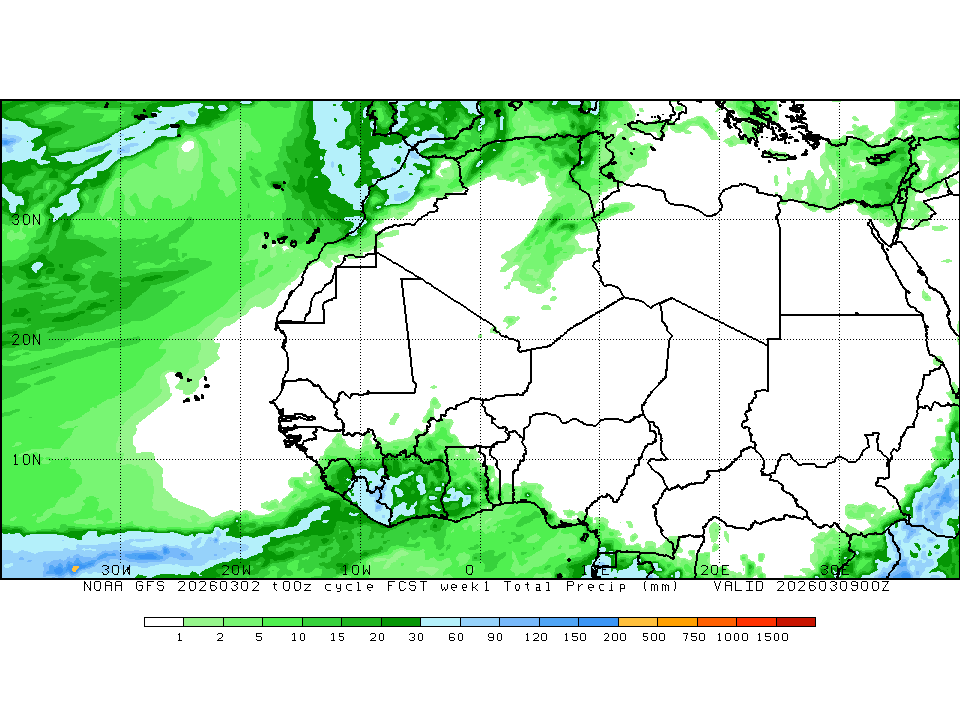
The zoomed forecast for Côte d’Ivoire and Ghana shows widespread moderate to locally strong rainfall across the core cocoa belt. Most producing areas are shaded in medium to dark green, indicating approximately 30 to 60 millimeters of accumulated rainfall over the week. Several embedded light blue pockets suggest localized totals in the 60 to 90 millimeter range, particularly in southwestern Côte d’Ivoire and parts of southern and central Ghana. The rainfall coverage appears broad and well distributed rather than isolated to narrow storm bands.
This pattern points to consistent moisture availability across the main cocoa-growing zones. The projected totals are sufficient to maintain soil moisture, support flowering, and sustain pod development without indicating excessive rainfall or flooding risk. Humidity levels will remain elevated, which may sustain moderate disease pressure, but there is no sign of extreme precipitation stress. Overall, the forecast supports stable crop development conditions across both countries rather than signaling a weather-driven production threat.
Week 9: 23.2.26 - 30.2.26
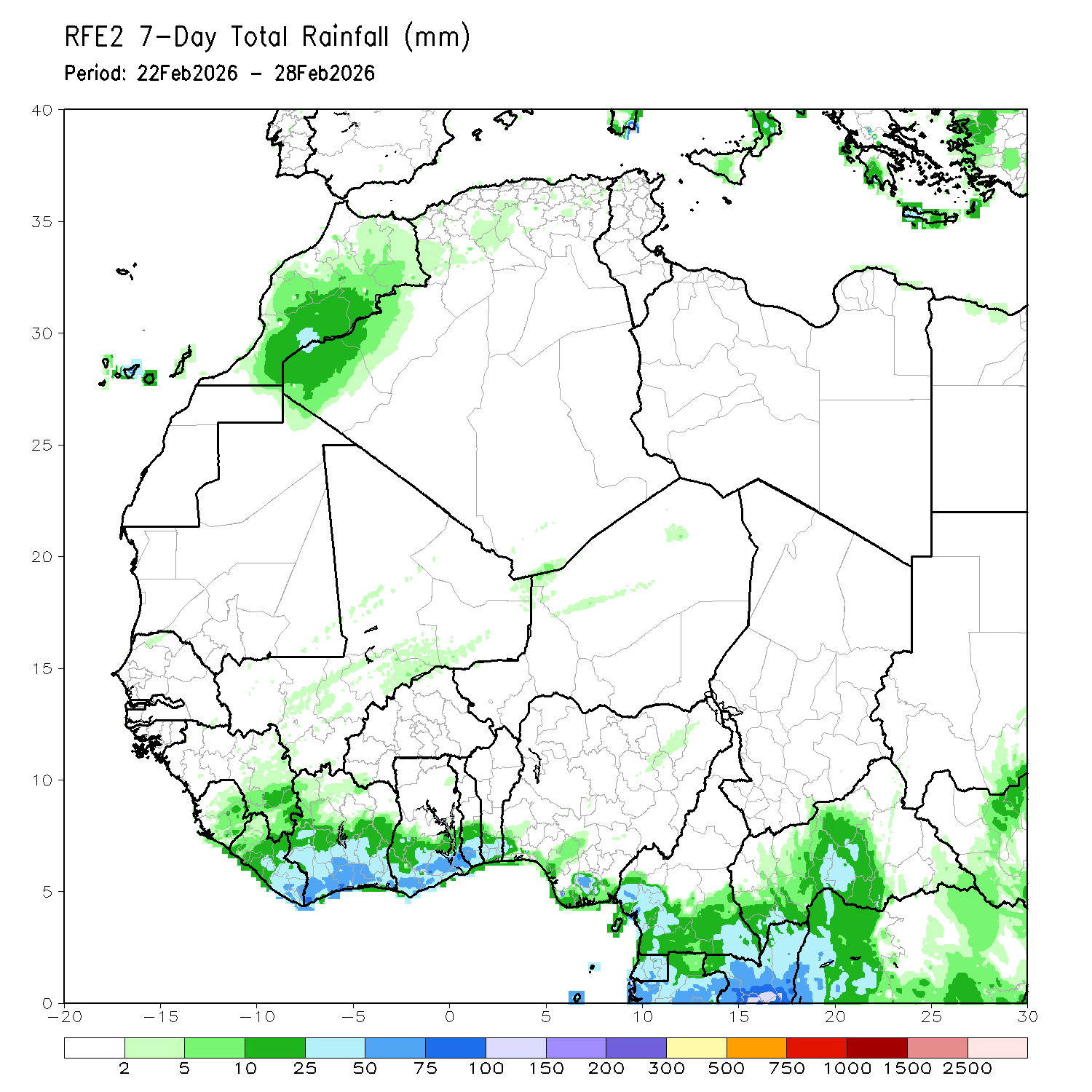
For the week 22–28 February 2026, total rainfall across southern Côte d’Ivoire and southern Ghana was generally moderate. Coastal and southwest Côte d’Ivoire show 40 to 75 millimeters, with some localized blue pockets suggesting near 75 millimeters. Southern Ghana appears mostly in the 25 to 60 millimeter range, lighter inland toward central zones. Northern sections of both countries were largely dry.
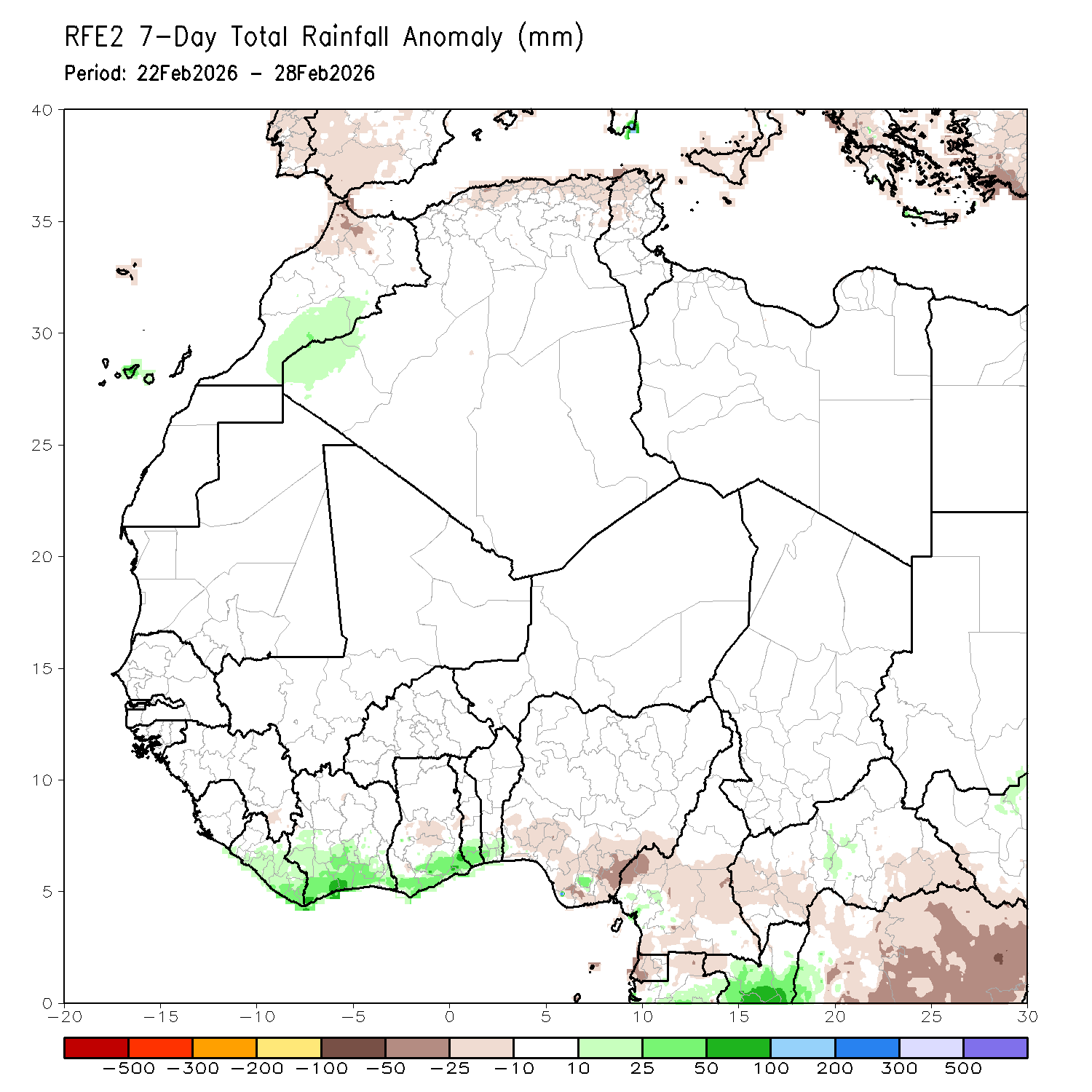
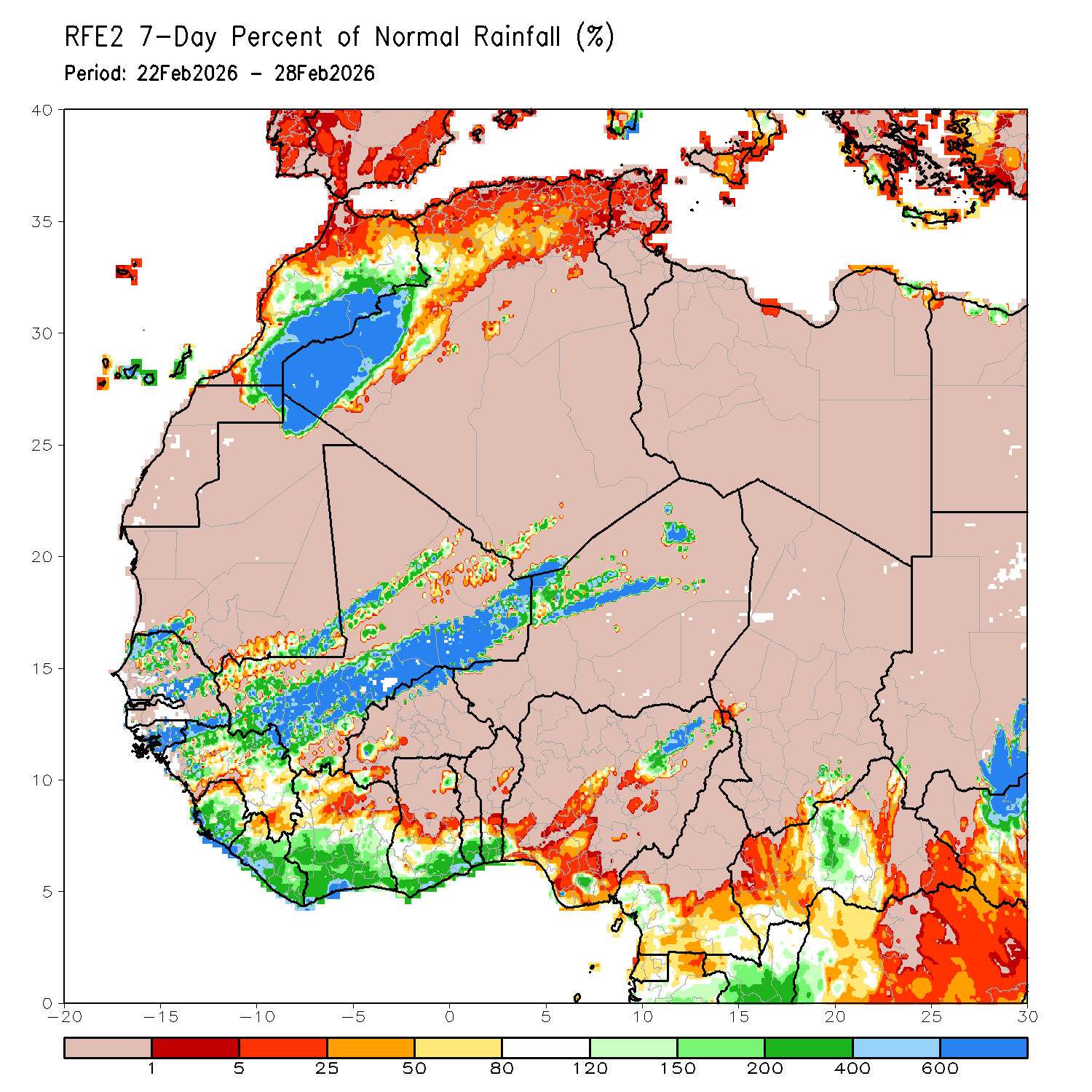
Now the critical part is the anomaly and percent-of-normal maps. The anomaly map indicates that much of the cocoa belt recorded positive rainfall anomalies. The percent-of-normal map shows widespread areas in the 120 to 200 percent range across southern Côte d’Ivoire and southern Ghana, with embedded zones exceeding 200 percent of normal. That means rainfall was significantly above climatological expectations for late February, which is typically still part of the dry season transition.