What’s Really in a Chocolate Bar? Cocoa, Sugar, and the Truth About Chocolate Ingredients
Most chocolate bars contain more sugar than cocoa. Many mass-market chocolates are made with 45–55% sugar and less than 30% cocoa, plus milk powder and emulsifiers. Knowing these ingredients helps explain what the cocoa percentage on a chocolate label really means.
Why Most Chocolate Bars Contain More Sugar Than Cocoa
In the chocolate aisle of a supermarket, nearly every bar promises indulgence. The wrappers display cocoa pods, dark squares, and words like artisan, premium, or rich dark chocolate. The packaging suggests craftsmanship and luxury. But a closer look at the ingredient list often tells a different story. In many mass-market chocolate bars, sugar appears first. Cocoa appears second.
For most consumers, that detail goes unnoticed. Chocolate is widely perceived as a treat made from cocoa, perhaps with some sugar added for sweetness. Yet in many modern chocolate products the proportions are reversed. The average supermarket chocolate bar is not primarily a cocoa-based product. It is a sugar-based product flavored with cocoa.
This contradiction lies at the heart of the modern chocolate industry. Chocolate occupies a curious place in contemporary culture. It is marketed as comfort, romance, heritage, and indulgence, a small luxury wrapped in foil and elegant typography. Yet behind this storytelling is a quieter reality. Many chocolate bars contain surprisingly little cocoa.
The growing popularity of high-percentage chocolate bars, particularly those labeled 85%, 90%, or even 99% t cocoa, has begun to expose this gap between perception and reality. These products strip chocolate down to its essential ingredients and reveal how diluted mainstream chocolate has become.
The percentage printed on a chocolate wrapper refers to the combined amount of cocoa solids and cocoa butter in the bar. It does not measure flavor quality, farming practices, processing methods, or nutritional value. A 99% chocolate bar is almost entirely cocoa, sometimes containing only a trace of sugar. An 85% bar may still contain ten to 15% sugar. Many mass-market milk chocolates contain less than 30% cocoa.
In other words, much of what is sold as chocolate is mostly sugar.
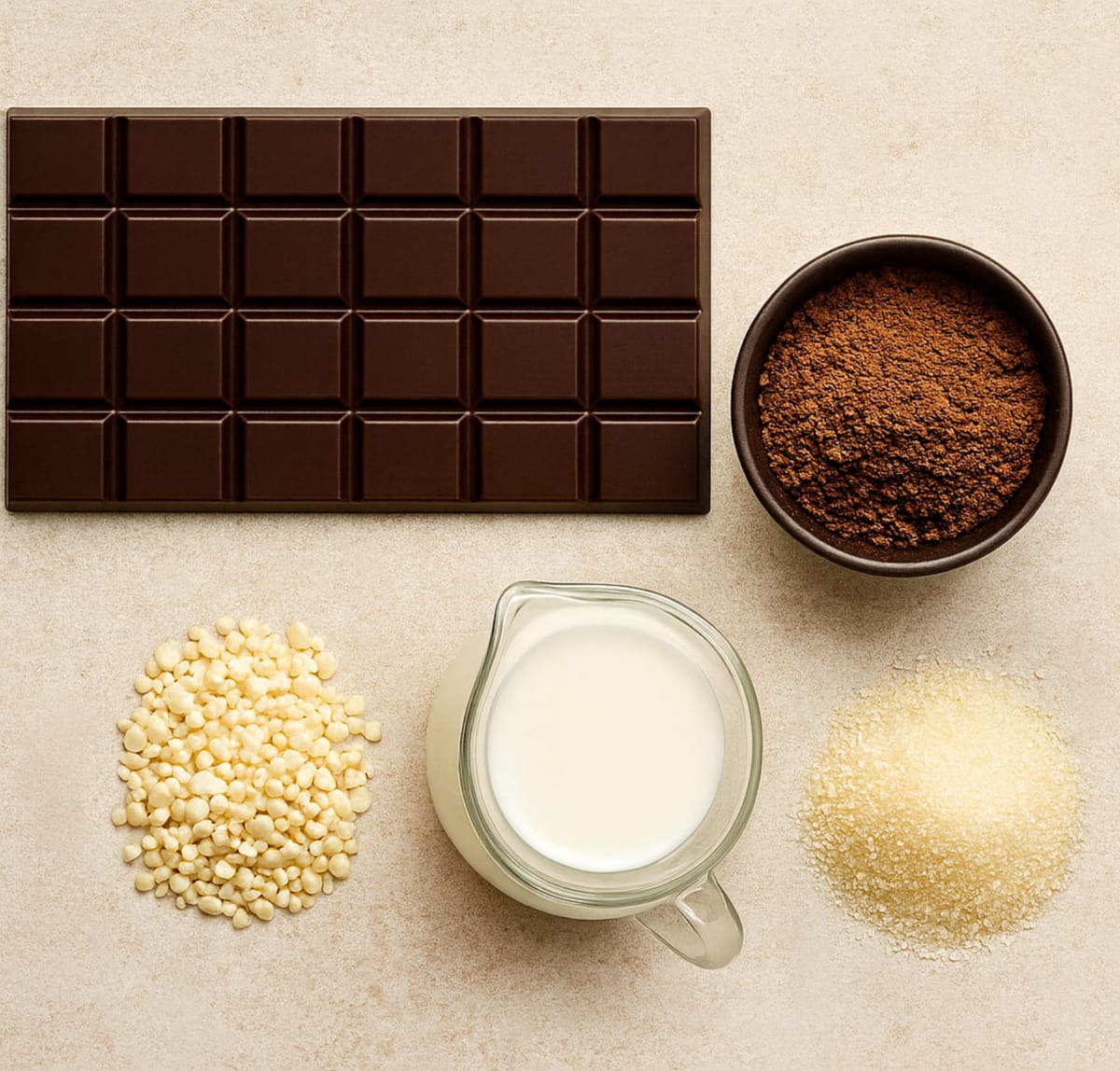
The ingredient breakdown makes this clearer. A typical mass-produced milk chocolate bar often consists of roughly 45% to 55% sugar and less than 30% cocoa ingredients, along with milk powder, emulsifiers such as soy lecithin, and flavor additives such as vanillin. The resulting flavor owes more to sweetness and dairy than to cocoa itself.
This shift reflects broader changes in the global diet. Public health research has documented a dramatic rise in global sugar consumption since the mid-twentieth century, driven largely by processed foods and confectionery products. Chocolate, once a bitter agricultural product consumed in drinks and minimally sweetened forms, has gradually been transformed into a sweet confection.
For many people, the first taste of extremely dark chocolate, particularly a bar containing 99% cocoa, is surprising. The bitterness can feel intense to those accustomed to sweeter chocolate. Some assume that cocoa itself must naturally taste unpleasant.
In reality, cocoa can express a remarkable range of flavors. Depending on where the beans are grown and how they are processed, cocoa may taste floral, fruity, nutty, earthy, acidic, or smoky. Like coffee or wine, cocoa is an agricultural product shaped by soil, climate, fermentation, and roasting. The shock of tasting very dark chocolate often reveals less about cocoa itself and more about what decades of sweetened chocolate have trained the palate to expect.
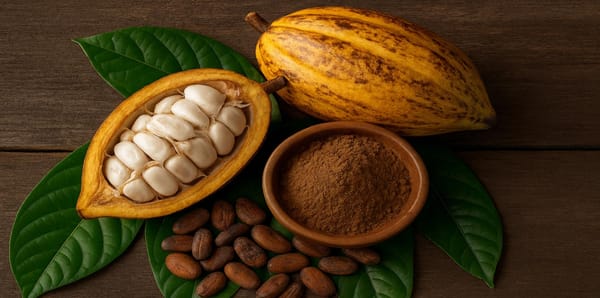
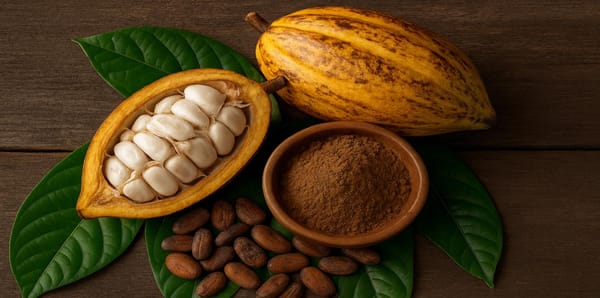
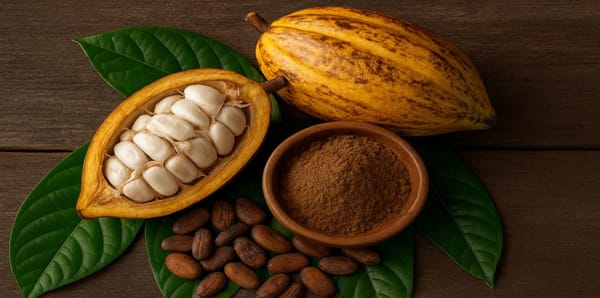
Understanding cocoa flavor requires looking beyond percentages to the biology and processing of the beans themselves. Cocoa comes from the seeds of Theobroma cacao, a tropical tree cultivated primarily in West Africa, Latin America, and Southeast Asia. After harvest, the seeds are fermented for several days, a critical step that develops the chemical precursors of chocolate flavor. During fermentation and drying, enzymes transform bitter compounds and generate hundreds of volatile molecules responsible for cocoa’s aroma. Genetic variation among cocoa varieties, including Criollo, Forastero, and Trinitario, influences flavor potential, while roasting determines which compounds are preserved or destroyed. Poor fermentation or excessive roasting can flatten or burn these flavors, while careful processing can produce chocolate with complex notes resembling berries, citrus, nuts, or caramel.
Cocoa percentage alone therefore does not determine quality. The craftsmanship behind the beans matters far more.
Legal definitions of chocolate provide surprisingly little guidance to consumers. Many people assume that the label dark chocolate implies a high cocoa content, but the regulatory requirements are modest. In the United States, federal regulations require milk chocolate to contain at least 10% chocolate liquor and products labeled dark, semi-sweet, or bittersweet chocolate to contain at least 15% chocolate liquor. There is no legal limit on the amount of sugar that may be added.
In the European Union the rules are slightly stricter but still permissive. Under the EU Chocolate Directive, dark chocolate must contain at least 35% total cocoa solids, while milk chocolate must contain at least 25% cocoa solids and 14% milk solids. The regulation also allows manufacturers to include up to 5% non-cocoa vegetable fats if they are declared on the label.
Internationally, the Codex Alimentarius standard used as guidance for global trade similarly permits up to 5% vegetable fat and does not impose a universal minimum cocoa percentage. Across most jurisdictions there is no legal definition of dark chocolate, no limit on sugar content, and no requirement to disclose cocoa sourcing, labor practices, or farmer compensation.
The law establishes only low minimum thresholds. Everything beyond that is left to marketing.
The economics of chocolate production explain why manufacturers often reduce cocoa content. Cocoa beans are the most expensive raw ingredient in chocolate. Sugar, milk powder, emulsifiers, and flavor additives cost significantly less. Reducing cocoa content while increasing sugar content lowers production costs and increases profit margins.
At the same time, chocolate remains one of the most profitable sectors of the global food industry. The worldwide chocolate market is valued at well over one hundred billion dollars annually and continues to grow. Yet only a small fraction of that value reaches the farmers who grow the cocoa.
In a typical five-euro supermarket chocolate bar, the value of the cocoa itself may represent only a few tens of cents. The rest of the price reflects manufacturing, packaging, marketing, distribution, and retail markup. In some cases the wrapper and advertising budget cost more than the cocoa inside the bar.
Chocolate also benefits from a persistent reputation as a health food. Manufacturers frequently highlight research linking cocoa to cardiovascular benefits, improved mood, and antioxidant activity. There is some scientific basis for these claims, but with an important qualification.
Pure cocoa is naturally rich in flavanols, plant compounds associated with improved blood vessel function and reduced inflammation. However, many chocolate manufacturing processes significantly reduce these compounds. One common technique, known as alkalization or Dutch processing, alters cocoa’s acidity to produce a darker color and milder flavor. Studies have shown that this process can dramatically reduce flavanol levels in cocoa products.
When large quantities of sugar and milk are added to heavily processed cocoa, the resulting chocolate contains far fewer of the compounds responsible for cocoa’s potential health benefits. The nutritional reputation often associated with chocolate therefore belongs largely to cocoa itself, not to the confectionery products most consumers buy.
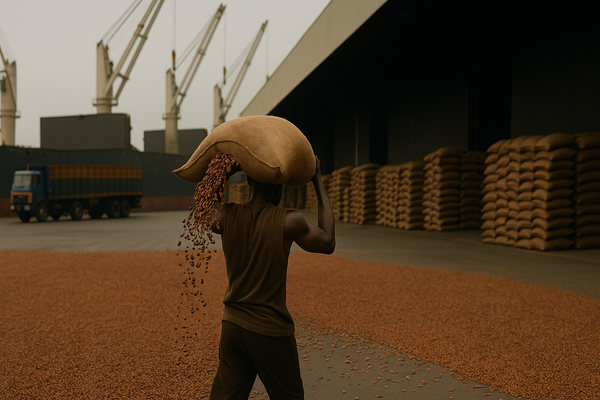
There is also a human cost embedded in the global chocolate supply chain. More than 60% of the world’s cocoa supply comes from Côte d’Ivoire and Ghana, where millions of small farmers cultivate cocoa on small plots of land. Cocoa production is a major source of income for rural households across West Africa.
Despite the scale of the global chocolate market, many cocoa farmers earn extremely low incomes. International research has documented persistent poverty in cocoa-growing regions along with ongoing concerns about child labor and deforestation linked to cocoa expansion. When manufacturers reduce cocoa content and replace it with cheaper ingredients, profit margins increase but the economic situation of farmers rarely improves.
Meanwhile the marketing language surrounding chocolate continues to emphasize craftsmanship, heritage, and indulgence. Swiss tradition, Belgian mastery, artisan texture, velvet smoothness. These narratives shape consumer perception but rarely reveal the realities of sourcing, processing, or ingredient composition.
Few chocolate wrappers tell consumers where the cocoa was grown, how farmers were paid, or whether forests were cleared to produce it. Chocolate is sold as a story rather than an agricultural commodity.
This is where extremely dark chocolate becomes revealing. A 99% cocoa bar cannot hide behind sugar, milk powder, or artificial vanilla. Its flavor comes almost entirely from cocoa itself. For some people that taste is overwhelming at first. For others it reveals a new appreciation for the complexity of the ingredient.
More importantly, it exposes the distance between chocolate as a cultural symbol and chocolate as an agricultural product.
Choosing better chocolate does not require expertise or elitism. It simply requires attention. Ingredient lists provide the first clue. If sugar appears before cocoa, the manufacturer has made a clear decision about what matters most in the recipe. Transparency is another indicator. Companies that openly disclose cocoa origin, sourcing practices, and production methods tend to treat cocoa as a primary ingredient rather than a flavoring.
Cocoa percentage alone is not enough. Quality depends on the beans, the fermentation, the roasting, and the care taken throughout production.
For decades consumers have believed they were buying chocolate when in reality they were often buying sugar shaped into the idea of chocolate. That misconception has allowed the industry to prioritize marketing over ingredients and perception over transparency.
The existence of very high-cocoa chocolate does not solve these problems, but it does reveal them. Once a person begins reading ingredient labels more closely, the chocolate aisle starts to look different. It becomes less of a place for indulgence and more of a place for questions.