
Coffee Prices Surge as Brazil's Harvest Delays Offset Strong Vietnam and Honduras Exports (1 July 2026)

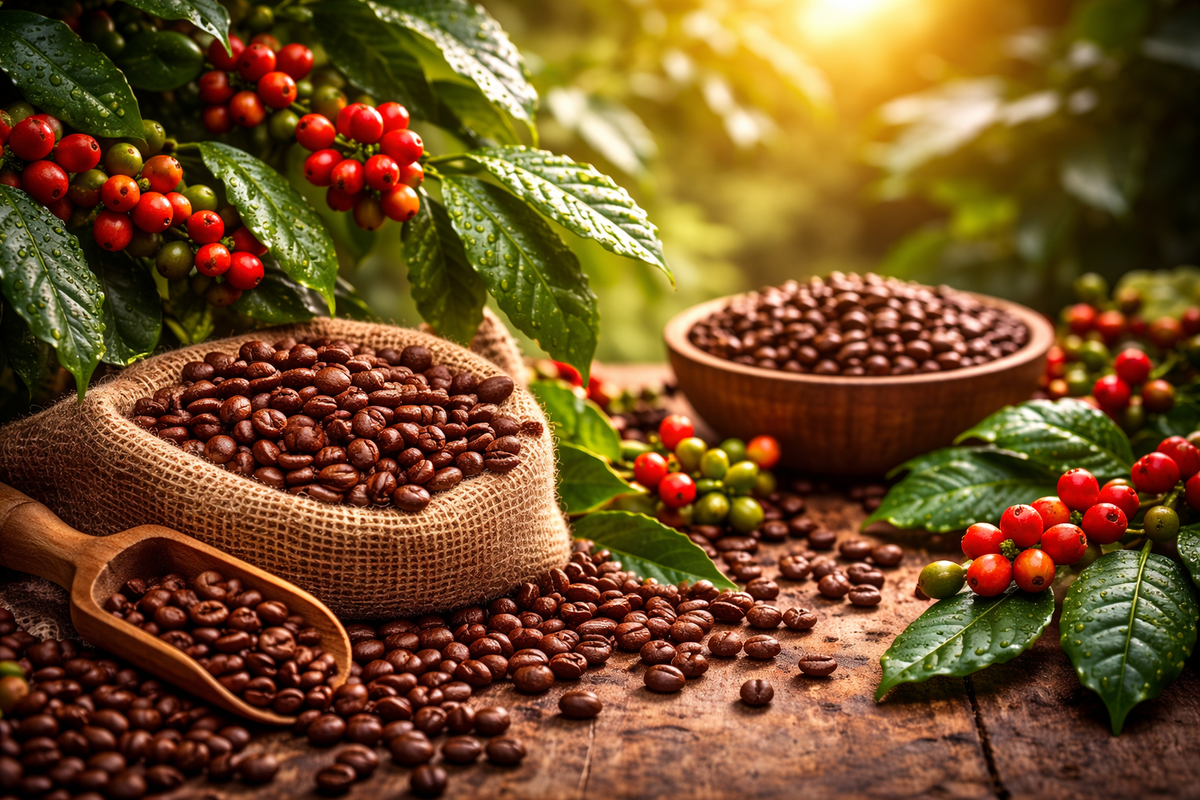
The global coffee market rallied sharply at the beginning of July, with traders focusing primarily on Brazil’s weather-related supply risks. Heavy rainfall delayed the Arabica harvest, threatened bean quality, raised concerns about potential production losses, and coincided with historically low ICE-certified stocks and renewed speculative fund buying. Arabica futures in New York closed more than 4% higher on July 1, while Robusta prices in London also posted strong gains. At the same time, strong export performance from Vietnam and Honduras acted as a counterbalancing bearish factor, showing that supply from other major origins remains active.
On ICE Futures U.S., the September 2026 Arabica contract closed at 309.90 cents/lb, up 1,345 points, after reaching an intraday high of 316.40 cents/lb. The December 2026 contract ended at 294.85 cents/lb, up 1,275 points. In London, September Robusta rose US$113 to US$3,771/ton, while November Robusta gained US$114 to US$3,726/ton. Trading was highly active, with around 73,000 lots changing hands by the close.
The main bullish driver remains Brazil’s weather. Unseasonal rainfall during June disrupted harvesting, drying, and processing across key Arabica-producing regions. The rains caused cherries to fall from trees, increased the volume of lower-quality ground coffee, made patio drying difficult, and raised the risk of mold in both fallen beans and fruit still on the plant. Cepea also warned that excessive moisture could trigger premature flowering, creating additional risk for the 2027 crop through uneven maturation and greater pest pressure.
Brazil’s harvest remains behind normal. Safras & Mercado estimated the national coffee harvest at 44% complete, compared with 51% at the same time last year and a five-year average of 47%. Arabica harvesting was only 33% complete, versus 42% at the same point in 2025. Cooxupé reported that its members had harvested 24.9% of the crop by June 28, the slowest pace for this period since at least 2018.
In Cooxupé’s monitored regions, harvest progress reached 29.8% in South Minas, 16.2% in Cerrado Mineiro, 30% in Matas de Minas, and 26.5% in São Paulo. The cooperative’s survey covers more than 22,000 producers across more than 370 municipalities in Minas Gerais and São Paulo. The current harvest rate is 6.5 percentage points behind 2025 and approximately 17.4 percentage points behind 2024.
Expocacer reported similar delays in the Cerrado Mineiro region. Its Arabica harvest had reached 27% by June 26, compared with 35% at the same point last year, while only 12% of the harvested volume had been processed. Average yields were estimated at 550 to 570 liters per 60-kg bag. The cooperative said rains in the fourth week of June delayed harvesting and processing and caused approximately 25% of fruit to fall to the ground, potentially reducing productivity and quality.
The regional picture remains uneven but broadly concerning. Carmo do Paranaíba is about 30 days behind last year. São Gotardo and Rio Paranaíba are only around 10% harvested because of higher altitude and frequent rains. Monte Carmelo is about 30% harvested but has seen early flowering and quality deterioration. In Araguari, 30% to 35% of the expected coffee has been harvested, but some green fruit rapidly moved to the dry stage after the rains, threatening ripening uniformity and final quality.
Rainfall data underline the abnormal conditions. In Expocacer’s area, June rainfall averaged 38.2 mm, compared with only 9.2 mm in the same period last season. Total rainfall during the 2025/26 cycle reached 1,441.9 mm, 14.1% above the previous season. Although drier conditions were expected between June 27 and July 1, forecasts suggested rains could return around July 15, potentially disrupting harvest progress again.
Production-loss estimates are becoming a key market concern. Before the recent rains, USDA estimated Brazil’s 2026 crop at 71.9 million bags, including 47.5 million bags of Arabica and 24.4 million bags of Robusta. IBGE estimated 66.8 million bags, including 44.4 million Arabica and 22.4 million Robusta. Using the midpoint of those Arabica estimates gives a crop near 45.95 million bags.
Some market reports suggest that around 25% of Arabica cherries may have fallen to the ground. If applied across the crop, that would equal roughly 11.5 million bags, a volume comparable to Colombia’s annual Arabica production. Agnocafé estimates that around 60% of this fallen coffee may still be collected, equivalent to about 6.9 million bags, mostly lower-quality coffee likely destined for the domestic market. The remaining loss could reach around 4.6 million bags, potentially reducing effective Arabica output to about 41.3 million bags.
Certified stocks remain another major support factor. ICE-certified Arabica inventories fell by another 3,069 bags to 377,465 bags. One year earlier, stocks stood at 841,173 bags, meaning inventories have fallen by 463,708 bags over twelve months. Stocks declined by 63,853 bags in May and 58,191 bags in April. During 2025, certified inventories fell by 526,812 bags, or 53.76%.
The tightness is especially important for washed Arabica supply. Traders reported limited offers from origins such as Colombia and Peru, while Brazilian producers remained cautious sellers despite the rally in futures. Demand for good-quality coffee in Brazil increased, but physical business stayed limited because sellers preferred to wait for more clarity on price direction as the harvest progressed. Quality coffee in southern Minas Gerais was estimated around R$1,800 per 60-kg bag.
Speculative buying amplified the move. Funds and other large participants increased long exposure as technical resistance levels were broken. September futures traded in a wide range between 293.10 and 316.40 cents/lb. Analysts cited resistance at 319.83, 329.77, and 343.13 cents/lb, with support at 296.53, 283.17, and 273.23 cents/lb. ICE Futures U.S. also raised coffee contract margins by 50%, bringing the requirement to US$8,500 per contract.
Brazil also announced improved financing conditions for the 2026/27 coffee harvest through Funcafé. The fund will provide R$7.37 billion to the coffee sector. Marketing received the largest allocation, at R$2.713 billion, followed by coffee acquisition with R$1.708 billion, production costs with R$1.616 billion, working capital with R$1.150 billion, and plantation recovery with R$180 million. Interest rates were reduced to 11.5% per year for production, marketing, options, futures, and plantation recovery, while FAC and working-capital lines were set at 13.0% per year.
The broader Brazilian Crop Plan totals R$525.1 billion, R$9 billion more than the previous cycle. It includes R$384.9 billion for production costs and R$140.2 billion for investments such as irrigation, storage, fleet renewal, and farm technology. The plan also includes incentives for environmental compliance and sustainable agricultural practices, including potential interest-rate discounts for producers with a valid Rural Environmental Registry and recognized sustainability measures.
Outside Brazil, export data presented a more bearish counterweight to the rally. Vietnam exported 1.1 million metric tons of coffee in the first half of 2026, up 9.7% year on year, while export revenue increased 14.4% to US$4.78 billion. This indicates that robusta and other Vietnamese coffee flows remain strong despite elevated prices.
Honduras also reported strong supply movement. During the 2025/26 harvest year from October through June, exports rose 26% to 6.66 million 46-kg bags. Export revenue reached US$2.1 billion, while the average export price fell 11% to US$316.26 per 46-kg bag. Sales reached 7.03 million bags, up 23% year on year. Honduras exceeded its initial export forecast of 6.5 million bags, reaching 102.5% of target, and remains Central America’s largest coffee producer.
The market therefore faces a clear tension. Brazil’s weather problems, harvest delays, quality risk, low certified stocks, and fund buying are bullish for prices. Strong exports from Vietnam and Honduras are bearish because they show that supply from other origins is still moving into the market. For now, traders are assigning greater weight to Brazil’s Arabica risk, but the strength of non-Brazilian exports limits the argument for a one-sided bullish supply narrative.
Until Brazilian harvesting conditions improve, quality losses are better understood, and ICE-certified stocks begin rebuilding, coffee prices are likely to remain well supported and volatile. The next major focus will be rainfall forecasts, harvest progress, and whether reports of fallen cherries translate into a measurable reduction in exportable high-quality Arabica supply.