Africa Grows the Cocoa. Europe Still Sets the Rules

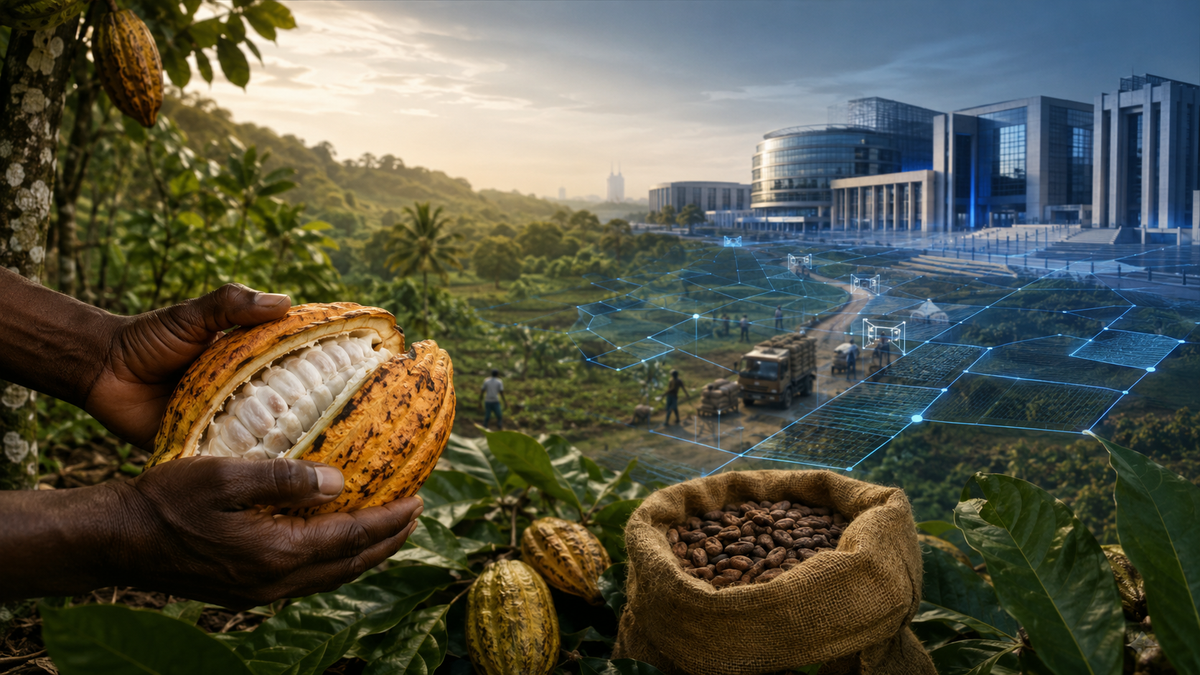
West and Central Africa produce most of the world’s cocoa, yet they do not automatically control the market. In commodity trading, physical dominance and commercial power are not the same thing. The decisive asset is not merely the bean, but the balance sheet that can finance purchases, carry inventories, manage price risk and wait for the right moment to trade. International traders and European processors have access to credit lines, warehousing networks, logistics and hedging instruments. A farmer who must pay for food, school fees, labour and the next crop rarely has the same freedom.
This explains the apparent paradox. Europe cannot readily replace West African cocoa at the scale required by its processing and chocolate industries, yet African countries often cannot suspend sales long enough to convert that dependence into pricing power. European buyers can temporarily draw on inventories, defer purchases, reduce production or redirect part of their sourcing. Producing countries, meanwhile, need immediate liquidity and the foreign-currency earnings generated by exports. Europe depends on African cocoa over the long term, but Africa often depends on European money much sooner.
Producing cocoa beans is only the first stage of the value chain. Financing, international trading, much of the processing, chocolate manufacturing, branding and access to the final consumer remain concentrated outside producing countries. Even when cocoa is ground in Côte d’Ivoire or Ghana, the resulting liquor, butter and powder must still be sold to international manufacturers. More processing at origin matters, but it does not by itself transfer control over the entire value chain.
To Withhold Cocoa, Governments Must First Pay for It
If a country wants to restrict sales and wait for a better price, its purchasing system must first finance the crop. Farmers must be paid when they deliver their beans, whereas the dollars or euros from the sale arrive only after the cocoa has been aggregated, inspected, transported, exported and paid for by the foreign buyer. That timing gap must be financed by the government, local banks, international lenders or the licensed buying companies themselves.
The scale is enormous. At roughly two million tonnes and CFA1,200 per kilogram, Côte d’Ivoire’s gross farmgate bill would be about $4.2 billion. Purchasing 600,000 tonnes in Ghana at approximately $3,600 per tonne would add another $2.2 billion. Côte d’Ivoire and Ghana alone therefore represent roughly $6.4 billion in annual farmer payments under these assumptions. Once Nigeria and Cameroon are included, a four-country mechanism intended to pay farmers and withhold a material share of the crop would need access to committed liquidity measured in the high single-digit billions of dollars—although not necessarily all drawn at once—excluding storage, transport, insurance, quality control, hedging, interest and contingency reserves. The central constraint is balance-sheet capacity, not a shortage of cocoa or political declarations.
Printing local currency does not solve the underlying problem. It does not create the dollars and euros needed for imports, external debt service and international trade, and it can accelerate inflation and currency depreciation. Domestic bond financing also has a cost: it increases public debt and absorbs funds that might otherwise finance businesses and the wider economy. External borrowing supplies foreign currency but returns the system to dependence on international banks, traders and creditors.
This is why Côte d’Ivoire and Ghana sell a significant share of their expected crops forward. Forward sales provide visibility over future revenue and can support financing for current purchases. The model offers farmers a degree of price stability, but it limits the state’s freedom because part of the crop has already been committed before it is produced. The country receives liquidity today but gives up some of its ability to withhold the entire crop and wait for better terms tomorrow.
Holding cocoa is not risk-free either. The beans must be stored, insured and protected from moisture, pests, theft and deterioration, while interest continues to accrue on the capital already committed. If the international price rises, the strategy may generate a profit. If it falls, the loss remains with the state and ultimately the taxpayer. The government is no longer simply protecting farmers; it becomes a very large holder of physical cocoa and assumes billions of dollars in market risk.
Events in 2026 demonstrated how quickly official prices, international market values and available financing can diverge. Unsold cocoa accumulated in Côte d’Ivoire, and the government pledged more than CFA500 billion to purchase it. In Ghana, the higher official price did not prevent delayed payments and liquidity shortages within the system. A government can announce a high farmgate price, but it cannot sustain that price indefinitely without sufficient working capital and an end buyer.
Abuja: A Common Political Voice Without a Common Balance Sheet
The Abuja Declaration brings together Côte d’Ivoire, Ghana, Nigeria and Cameroon around the objectives of increasing processing at origin, strengthening their position in international negotiations and coordinating their response to new trade requirements. Yet the four countries still do not operate as a single seller, nor do they use the same pricing systems. Political alignment is an important first step, but it cannot substitute for a shared financial mechanism.
Côte d’Ivoire and Ghana administratively set national farmgate prices and sell much of their crops in advance. Nigeria and Cameroon operate liberalised, market-based systems. That does not mean the state is absent: the authorities continue to regulate quality, exports and market participants. The difference is that there is no single nationally guaranteed price, and actual transactions respond more directly to the international market, exchange rates, quality, location and competition among buyers.
The divergence is evident at the start of Côte d’Ivoire’s new season. The country set a producer price of CFA1,200 per kilogram, equivalent to approximately $2,120 per tonne. Ghana’s latest published producer price is around $3,600 per tonne—almost 70% higher—although the comparison covers different stages of the two crop seasons and Ghana has not yet announced its 2026/27 price. In Cameroon, observed buying prices in Douala at the beginning of September ranged from CFA2,600 to CFA2,800 per kilogram, but this was a market range rather than a nationally guaranteed price.
Why Africa Cannot Yet Become a Cocoa OPEC
The comparison with OPEC is attractive but structurally incomplete. Oil producers can restrict output before extraction and leave the resource underground without first purchasing it from millions of individual producers. Cocoa must be harvested, fermented and dried within a limited biological window, and farmers must be paid shortly afterward. Once harvested, properly handled cocoa can be stored, but not indefinitely without cost or risk: financing charges accumulate, while exposure to humidity, pests, contamination and quality deterioration increases. Oil left underground does not create the same carrying costs or quality risk as cocoa already purchased from farmers.
The prospective members of a cocoa alliance also operate incompatible marketing systems. Côte d’Ivoire and Ghana set administered farmgate prices and sell substantial volumes forward, while Nigeria and Cameroon rely more heavily on liberalised, market-based pricing. These differences create opportunities for cross-border leakage. If one country restricts sales while a neighbour continues buying at a higher price or exporting freely, beans and market share can move across the border, weakening the collective intervention.
Finance is the central constraint. As the earlier calculation demonstrates, withholding a meaningful share of the four countries’ combined crop would require access to several billion dollars in committed liquidity, in addition to the cost of carrying and protecting the stocks. Without a shared balance sheet of that scale, coordinated withholding would quickly become a liquidity crisis for governments and producers.
Any effective arrangement would also require enforceable sales limits and a compensation mechanism. A country that withholds cocoa bears the financing and storage costs, while members that continue selling may benefit from the resulting price increase and capture additional market share. Because every government needs foreign currency and fiscal revenue, each has an incentive to let the others restrict supply while it sells first. Without transparent monitoring, compensation for withheld volumes and consequences for non-compliance, collective discipline is unlikely to survive periods of financial pressure.
Buyer behaviour places a further limit on producer leverage. If prices are held excessively high, processors can draw down inventories, reduce grindings, delay purchases, change product sizes or formulations where possible, and accelerate sourcing from other origins. Consumption may also decline. Africa’s production dominance gives it considerable negotiating power, but not unlimited control over demand. A viable producer alliance would therefore need to do more than imitate OPEC: it would have to combine crop finance, coordinated pricing and sales, controlled cross-border flows, strategic stocks and compensation between members.
Producer Power Is Also Weakened at Home
Not all of the imbalance is imposed from Europe. African governments and marketing institutions also bear responsibility for failing to convert production dominance into durable commercial power. Weak regional coordination, limited transparency in some crop-marketing systems, inconsistent pricing decisions, insufficient investment in traceability and the absence of adequately funded financial stabilisation reserves all reduce credibility with farmers, lenders and trading partners.
Administered prices can protect farmers from daily market volatility, but they become dangerous when they are not aligned with forward sales, export values and available financing. A high official price that cannot be financed produces arrears rather than bargaining power. Liberalised systems respond more quickly to international prices, but they make regional coordination more difficult and can intensify competition for beans across borders. Neither model creates collective power without transparent rules and credible institutions.
The Abuja initiative must therefore become more than a political declaration. A workable alliance would require audited financing arrangements, published pricing principles, independent reporting of stocks and sales, shared data standards and clear accountability for the use of crop revenues. Europe’s financial and regulatory influence is real, but producer countries will not counter it unless they also address the institutional weaknesses within their own systems.
EUDR: Europe Does Not Grow Cocoa, but It Determines Market Access
Financial dependence also has a regulatory dimension. The European Union does not formally govern African cocoa farms, but it determines the conditions under which cocoa and chocolate products may be sold in the European market. Under the EU Deforestation Regulation, or EUDR, operators must establish the product’s origin, provide geolocation data for the plots where it was produced and conduct due diligence demonstrating that the cocoa was not produced on land deforested after 31 December 2020.
The legal obligation falls primarily on companies placing products on the European market, rather than directly on individual farmers. In practice, however, much of the work is pushed back towards the countries of origin. Someone must map the farm, link the harvested beans to a specific plot, retain the necessary data and prevent them from being mixed with untraceable cocoa. Where cooperatives, buyers and government systems lack sufficient technology and financing, part of the cost is ultimately passed on to the producer through a lower farmgate price, restricted access to buyers or exclusion from European supply chains.
The environmental objective of the EUDR is legitimate. Deforestation, illegal cultivation in protected areas and weak traceability are genuine problems that producing countries also need to address. But a legitimate objective does not remove the question of who writes the rule, who can influence its technical design and who pays for compliance. Europe sets the standard for entry into its market, while much of the mapping, registration and control must be carried out in Africa.
This gives the EU regulatory power that reinforces its financial and commercial influence. An individual African country can refuse to meet the requirements, but it then risks losing buyers, foreign-exchange revenue and competitiveness against neighbouring origins. To negotiate effectively, producing countries need more than a common political position. They also need alternative markets, their own traceability infrastructure and sufficient financing to avoid accepting every condition under the pressure of the next harvest.
Corporate Lobbying: Who Is in the Room When the Rules Are Written?
The power of the EU and the influence of industry should not be conflated. EU institutions possess formal legal authority: the European Commission proposes and administers the regulatory framework, the European Parliament and Council legislate, and national authorities enforce the resulting obligations. Companies and trade associations cannot create the law themselves, but they can lobby over its timing, technical design and implementation.
Access to that process is highly unequal. Major processors, traders and chocolate manufacturers maintain public-affairs teams, registered interest representatives and memberships in industry associations. They can submit technical positions, participate in consultations and meet officials from the European Commission and members of the European Parliament. Individual African farmers and most local cooperatives have virtually no comparable permanent presence in Brussels.
The EUDR was postponed twice: first from the end of 2024 to the end of 2025, and then until the end of 2026 for large and medium-sized operators. Corporate and industry pressure formed part of the political environment surrounding those decisions, but it was not the only factor. The European Cocoa Association requested a delay in 2024, while Mondelez publicly called for another year in 2025. Pressure also came from other industries, EU member states and trading partners, while EU institutions cited information-system readiness and administrative burden among the reasons for changing the timetable.
The industry itself did not act as a unified bloc. Barry Callebaut has registered representation and access to the European policy process and is a member of the European Cocoa Association, yet its own public position opposed a further delay. Nestlé, Ferrero and Olam Agri also resisted the second postponement after investing in traceability and preparation. Meetings, lobbying registrations and association memberships therefore demonstrate access and the capacity to influence, but they do not prove control over the institutions or sole responsibility for a political decision.
The deeper imbalance is structural. Even when companies support opposing positions, they remain continuously involved in discussions about deadlines, technical formats and the allocation of compliance costs. The millions of producers expected to provide the data and operational work on the ground have no comparable voice in shaping those requirements. Europe possesses the authority to write the rule; organised industry has the resources to negotiate its implementation; African farmers and national systems carry much of the practical burden. That is how regulatory power becomes economic power, even when the physical commodity is produced elsewhere.
The Order of Execution
The sequence matters. First, producing countries must finance the crop. A regional mechanism needs sufficient committed liquidity to pay farmers promptly and carry strategic stocks without destabilising national budgets. It also requires independent governance, transparent auditing and clear limits on borrowing, hedging and inventory risk. Without this financial foundation, every attempt at coordinated withholding will collapse when the first country runs short of money.
Second, the countries must coordinate sales. That requires a common pricing principle, an agreed sales calendar, rules governing the accumulation and release of reserves, stronger monitoring of cross-border movements and a mechanism compensating any member that withholds cocoa for the benefit of the group. A price floor without enforcement and burden-sharing would remain a political declaration rather than a functioning market policy.
Third, producing countries must control their traceability data. Farmer identities, farm locations, production records and chain-of-custody information should sit within interoperable systems governed by producing countries and their institutions, rather than being fragmented across proprietary buyer platforms. Compliance with EUDR and other market standards should not make farmers permanently dependent on individual foreign companies for proof that their own cocoa is legitimate.
Only after these foundations are established can expanded processing and consumer-market access deliver their full value. Grinding more cocoa at origin is useful, but processing without reliable energy, finance, buyers and distribution may simply replace dependence on bean exports with dependence on foreign purchasers of butter, liquor and powder. Lasting value capture requires movement further downstream into finished products, brands, distribution and direct access to consumers.
These steps are cumulative, not interchangeable. Processing cannot compensate for inadequate crop finance. Traceability alone does not create bargaining power when sales remain fragmented. A common price cannot survive if farmers are not paid. Africa must first acquire the capacity to wait, then the discipline to sell collectively, then control over the data governing market access, and finally a larger share of the consumer-facing value chain.
Africa’s weakness is not a shortage of cocoa but a shortage of coordinated capital, enforceable institutions and time. Europe cannot easily replace African production, yet producing countries cannot fully exploit that dependence while each needs to sell before the buyer needs to purchase. Until they can finance their crops collectively, manage reserves transparently, control their traceability data and coordinate sales, Europe will continue to convert control over capital and market access into rule-setting power.